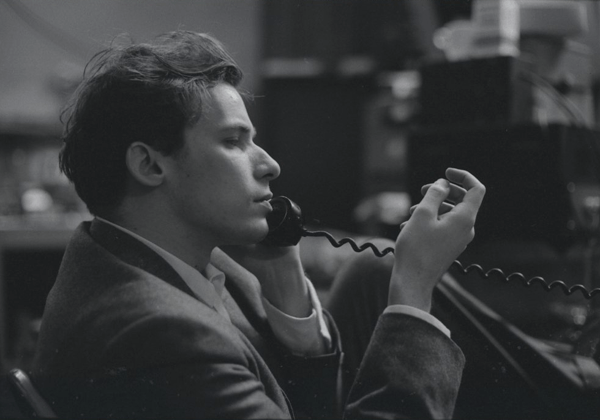
Dorothy Ainsworth’s Tribute to Glenn Gould
May 19, 2020
by Dorothy Ainsworth
No one ever told me I could be anything I wanted to be, or have anything I wanted. I told myself. Growing up in a large family with no money to spare, I saw my parents and siblings constantly creating amazing things out of nothing in their spare time. We were financially poor but rich in every other way.
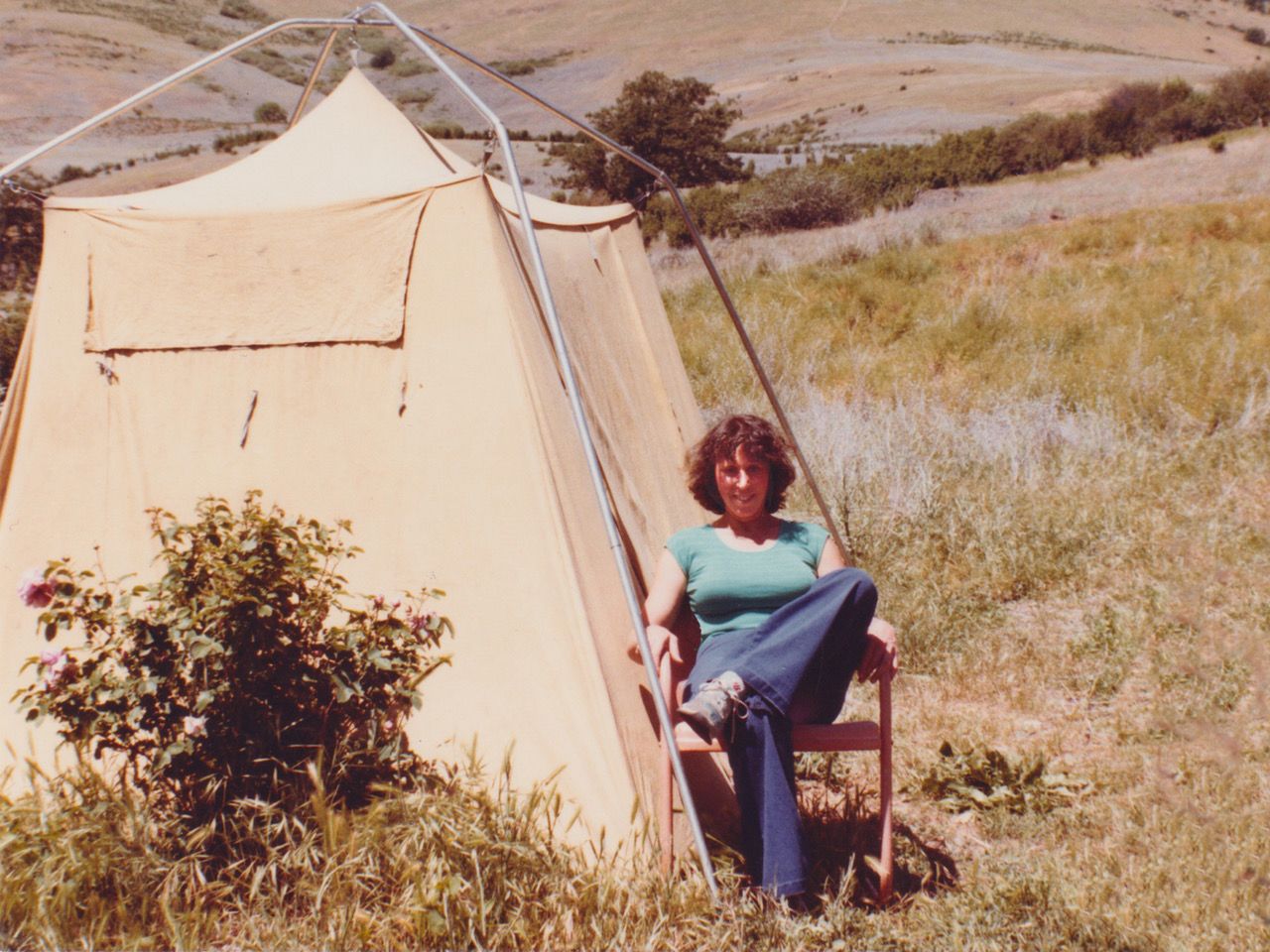
I had always wanted the security of my own home on a few acres, but didn’t want to be beholden to anybody to get it. Like “The Little Red Hen,” I’d do it myself, and I wanted to do it my way. I was a strong, healthy, single mom waitressing for a living and had no extra money, but that didn’t discourage me. I got a farm loan to buy ten acres in southern Oregon, and the saga began, living in an old army tent with a shotgun and my dog while remodeling an outbuilding into a livable cabin, and procuring water and electricity.
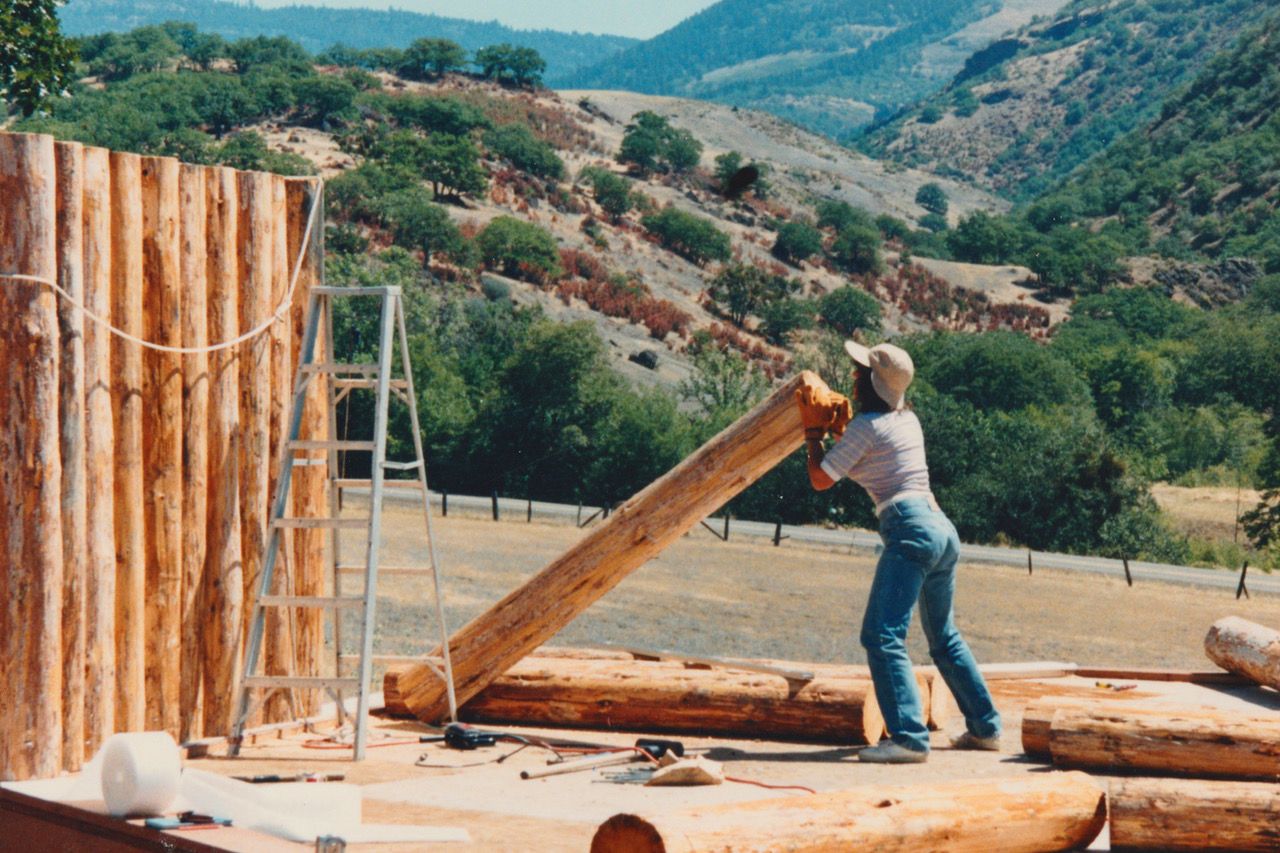
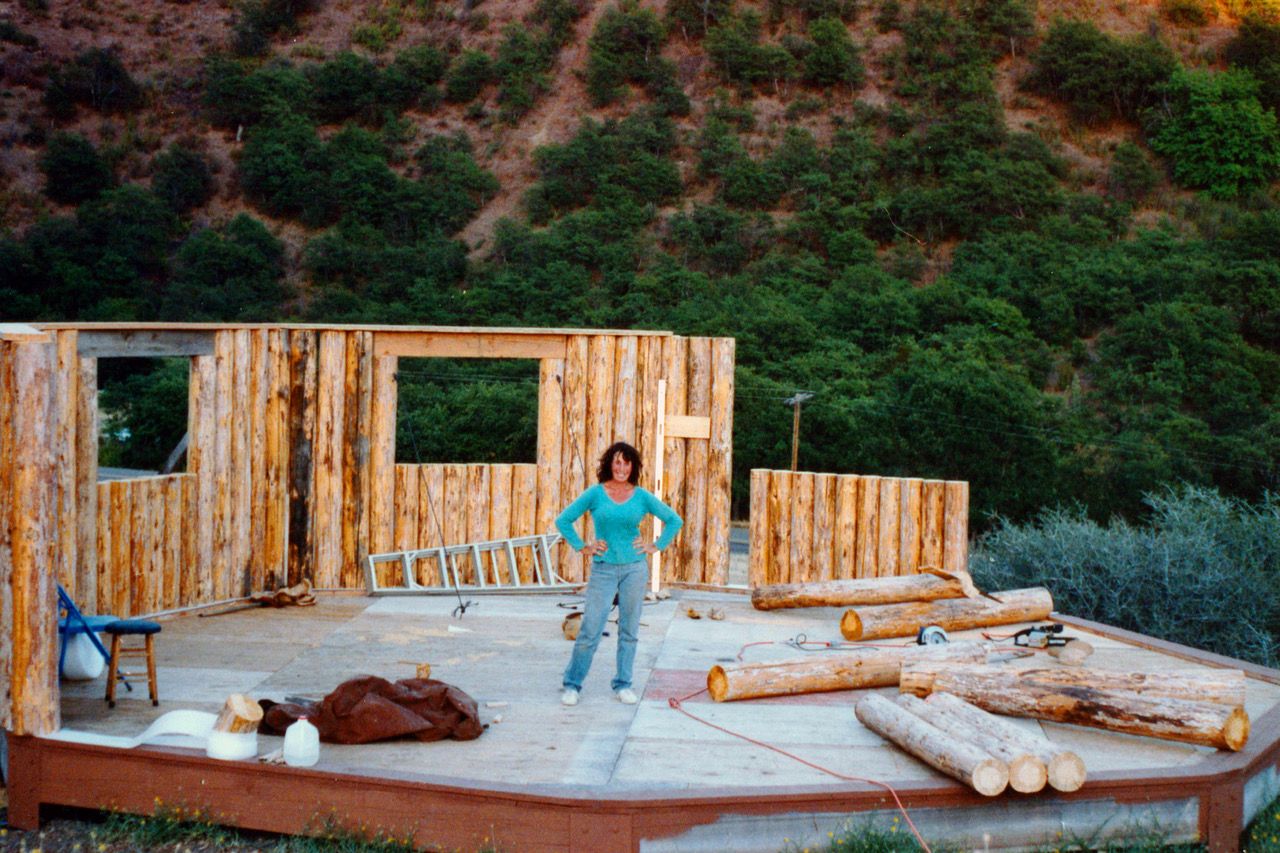
Once I learned about logs available for three cents a linear foot right out of the forest and only 25 miles away — with a pole permit from the United States Forest Service — I was off and running! The total cost of raw materials for the studio was $43 – well-suited to a waitress making just $1,000 a month. Son Eric, 18, a classical pianist and composer, helped cut and carry the 180 logs needed after designing the octagonal piano studio – in honor of Glenn Gould. Then he went off to piano tuning school.
I decided to practice on the studio first in a self-imposed apprenticeship program. Industry is its own reward, and when working alone, everything happens in small increments but adds up into huge results.
The key to my success was my ability to work solo, in complete solitude. I took my time to learn to use tools, figure out problems, and concentrate on the task at hand. Solitude was essential. I learned everything the hard way, which is the only way if you have almost no money. It took three years and $15,000 to complete the 1000-square-foot studio, paid for with waitress tips.
I understand why Glenn Gould fiercely protected his solitude and focused on his goals, without distractions. I did the same, and the journey was priceless.
Eric and I both feel a spiritual presence in the studio when we walk in. It’s like entering a church, and listening to Glenn Gould in the sanctuary is like a prayer. Glenn Gould’s spirit is alive and well in this little piano studio in Oregon.
Piano Studio Dedicated to the Memory of Glenn Gould
by Dorothy Ainsworth
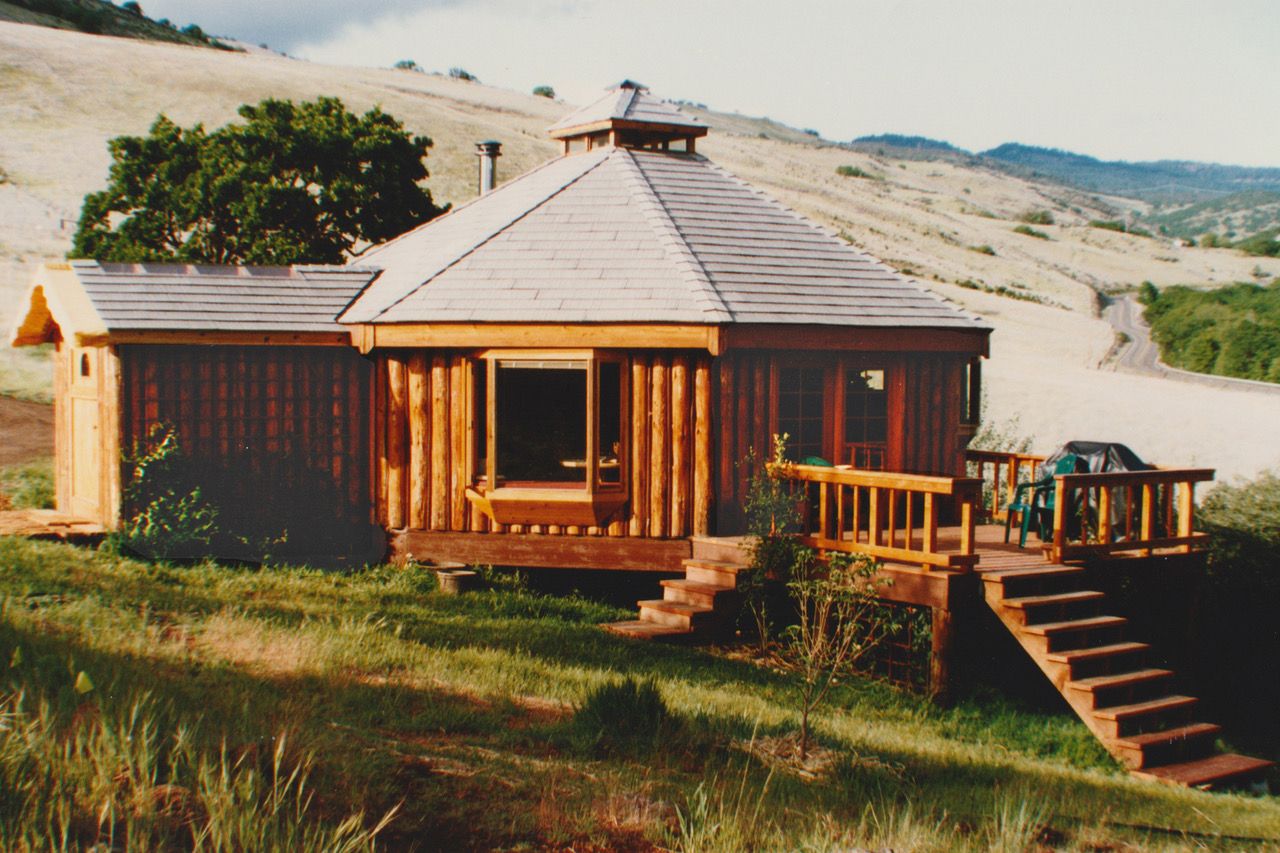
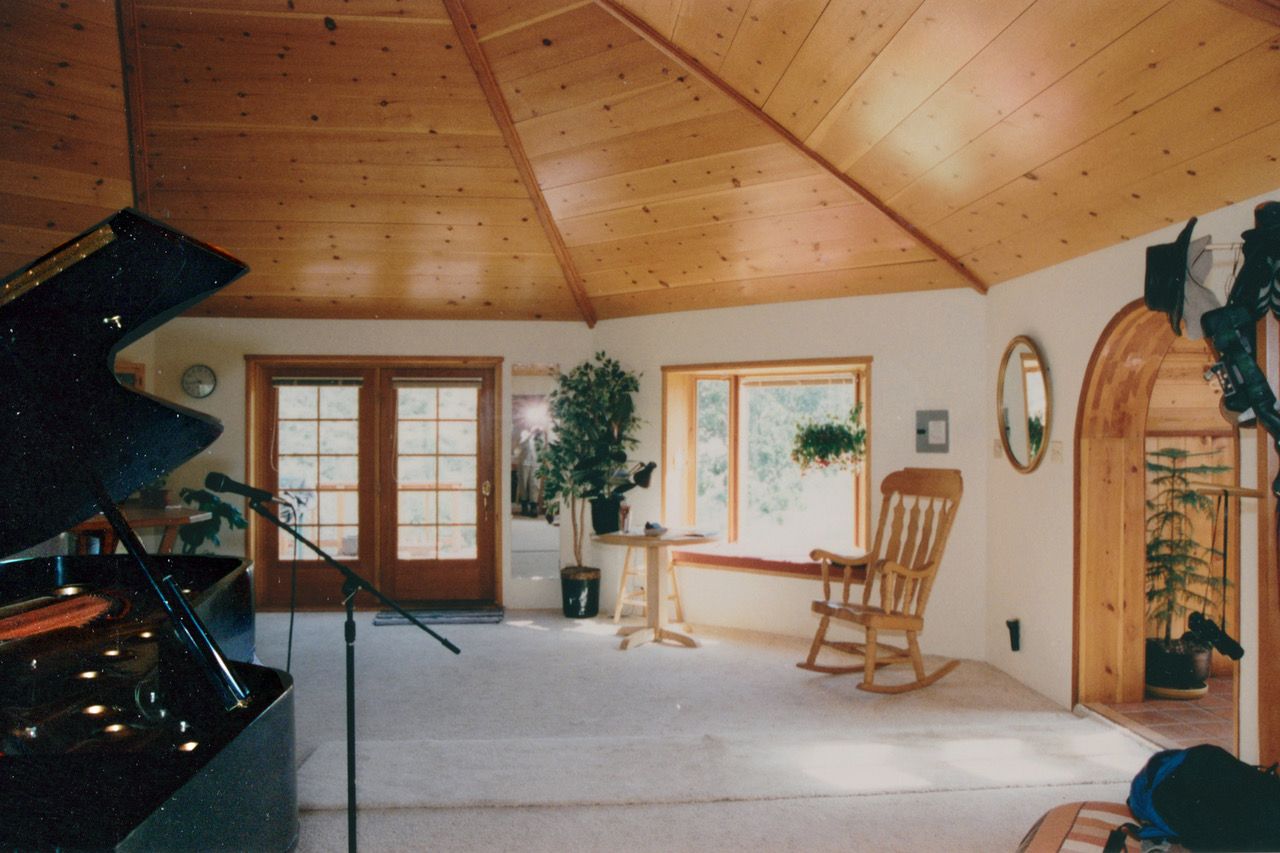
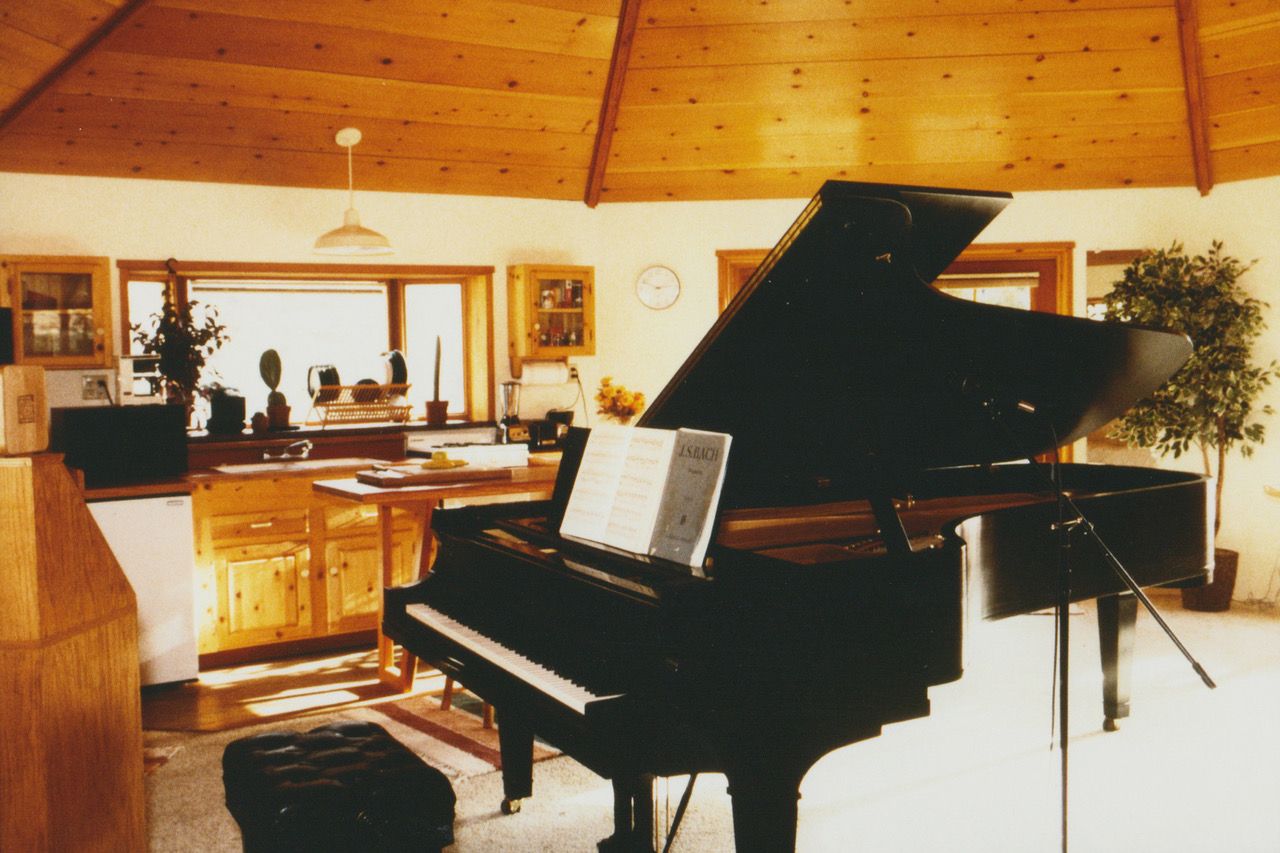
Back in 1982 when Glenn Gould unexpectedly died, my pianist son Eric (19) and I (39), both devoted fans of Mr. Gould, decided to build a piano studio in his honor.
Eric designed the 30-foot diameter, 8-sided studio for optimum acoustics, and we cut and carried 180 logs out of the Oregon forest for $42.00. We hauled them home in an old pick-up, and then I built a vertical log studio over the next three years in my spare time, learning construction techniques as I went along. Eric went off to school to become a piano technician/tuner and a recording engineer.
I wanted to create and forever maintain a hallowed place worthy of the music played within. I wanted to insure that classical music was elevated to the sublime status it deserves.
Eric, himself an accomplished pianist and Bach aficionado, is as passionate as they come about classical music and thus has always held Glenn Gould in his highest esteem. The perfection and exquisite beauty of Glenn Gould’s playing has continually inspired Eric to achieve his own musical goals since he first heard Gould’s Goldberg Variations at age 13 in 1976.
I think we can all agree that Glenn Gould’s music is beyond entertainment. It transcends the mundane, enhances the senses, and emotionally lifts one up to what I would define as pure heaven.
Our Glenn Gould Studio, with its 9-foot grand piano inside, stands as a testament to our love and appreciation for all the great composers and their musical interpreters throughout history. But Glenn Gould is the crowning glory, the ultimate vehicle through which piano music has been carried to a whole new level of purity, worthy of exaltation.
Glenn Gould lives on in the studio whenever we play his CDs, which is often and regularly. When it comes to Glenn Gould, too much of a good thing does not apply!
To see the studio click on: http://www.dorothyainsworth.com/piano/studio.html
How I Met Glenn Gould
by Eric Ainsworth
Glenn Gould was and still is instrumental (pun intended) in shaping and sustaining my musical passions.
In the mid-’70s I was a young and enthusiastic but undisciplined piano student. I had a penchant for ignoring my lesson assignments (mundane salon pieces and the obligatory scales and arpeggios), and indulging in Scott Joplin rags instead. I was ready for something new and exciting to come along – and it did.
In a record shop one day I spied an enticing album cover featuring a bewigged 18th century chap twiddling knobs and dials on a Moog Synthesizer. It was of course “Switched-On Bach” by Walter Carlos. I loved it and my interest in Bach’s music was permanently switched on.
I was surprised to hear later that Gould himself claimed Carlos’ realization of Bach’s 3rd Brandenburg Concerto was the best he had heard – live, canned, or otherwise.
At 13, my first encounter with Gould’s singular artistry occurred during an interlude on the weather channel where a leisurely walk in the park was accompanied by wonderful music, baroque in nature, yet as fresh as if written yesterday.
I called the TV station and learned it was Glenn Gould’s 1955 account of Bach’s Goldberg Variations. By turns sublime and dreamy to scintillating and edgy, I was captivated. After buying the album (it was in stock and still is!), I hurried home for an in-depth listen.
Due to a packaging error, and to my good fortune, the record inside (yes, vinyl) was of the thorny and unpianistic Beethoven/Liszt/Gould Fifth Symphony transcription, which Gould tossed off with well-oiled ease, his foot mostly staying clear of the damper pedal. I put many miles on that record, and strove to wear out each new Glenn Gould album I added to my collection.
Gould’s always thoughtful and sometimes astonishing playing never failed to draw me into a world of intellect, elegance, and beauty, balanced with raw unbridled macho energy. His anti-establishment style, ripe with rebellious phrasing and dangerous tempi, appealed to my teenage sensibilities.
I often felt personally invited by Gould to share in his enthusiastic discovery of wonderful landscapes and geometries in sound, springing to life from constellations of black dots and arcane symbols. To explore and share music together as collaborators in the symbiotic dance of artist and audience was Gould’s aim, I believe.
A famous conductor once quipped: “There is more music in a Bach Two-Part Invention than in an entire Mahler Symphony,” and with Gould at the helm, I might agree. He had an inimitable way of presenting Bach that convinced me I was hearing the greatest music ever written. He had dared to defy tradition, dispensing with stodgy and irrelevant mannerisms, and “historically accurate” sterilization of Bach’s timeless work.
Gould once said (paraphrased): I prefer to play modern music. When reminded of his nearly complete discography of Bach’s keyboard works, he retorted: “Bach is essentially a modern composer.”
We miss this iconic and brave musical mastermind, who revealed the true meaning of ecstasy, and the indomitable potential of the human spirit.