The Architecture of Music
August 4, 2020
by Stefan Berg


“Every child knows that play is nobler than work.”
– Cormac McCarthy, Blood Meridian
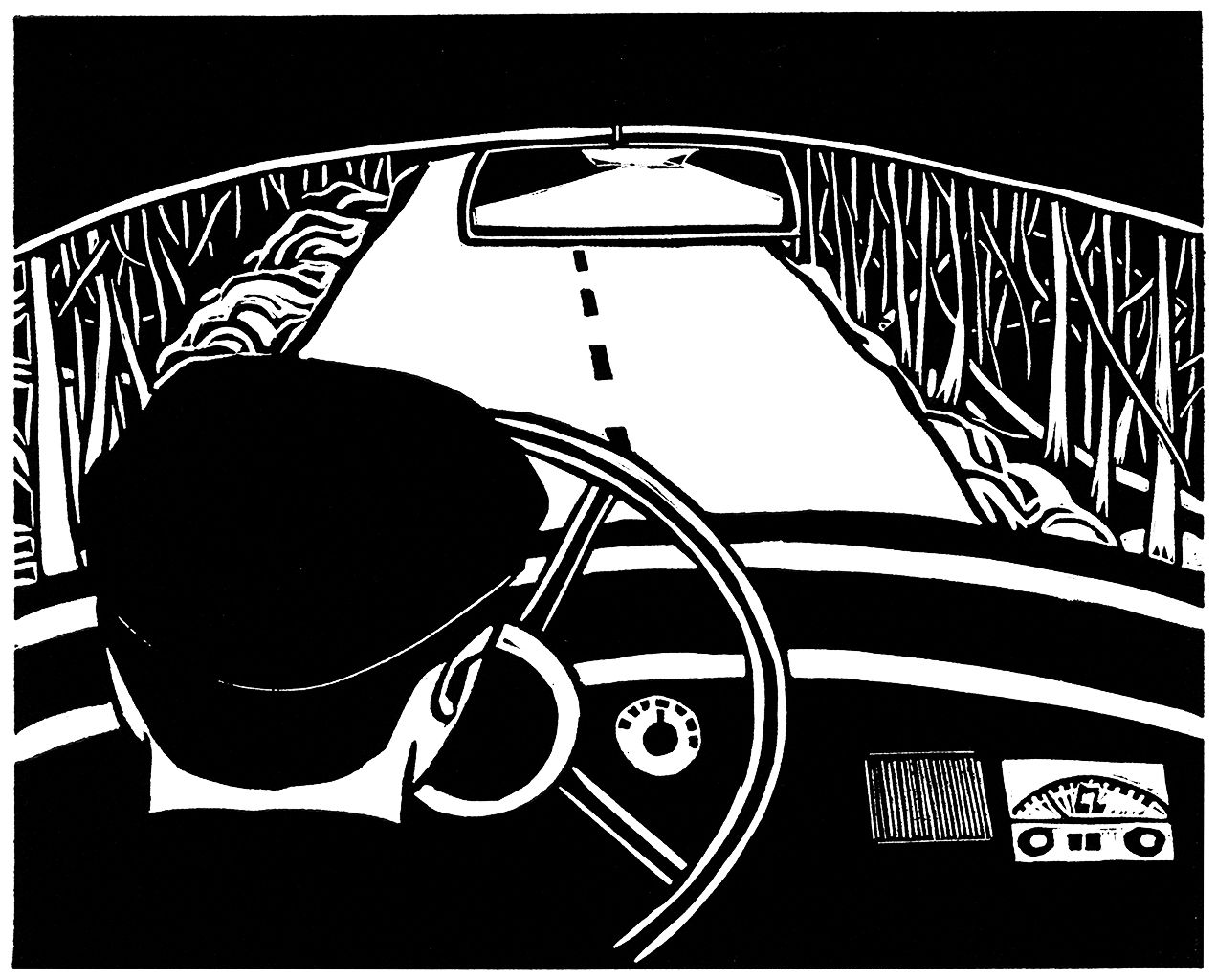
When I was 18 years old I started spending parts of each summer alone at my family’s cottage. These visits increased over the years, offering solitude away from the city. In 2015, I began a series of linocuts reimagining Glenn Gould’s struggle for truth, influenced by his decision to leave the stage at the height of his fame to dedicate himself fully to his craft. Perhaps in isolation we may steal some time away from the pace of life, to do what we love for the sake of doing. The effort to be concise is a great challenge for artists – to say much with little. I believe we witness this struggle when comparing Gould’s Goldberg Variations. In solitude, Gould distilled his interpretation. But let’s not forget that Gould’s solitude included many phone calls with friends.
About Architecture of Music
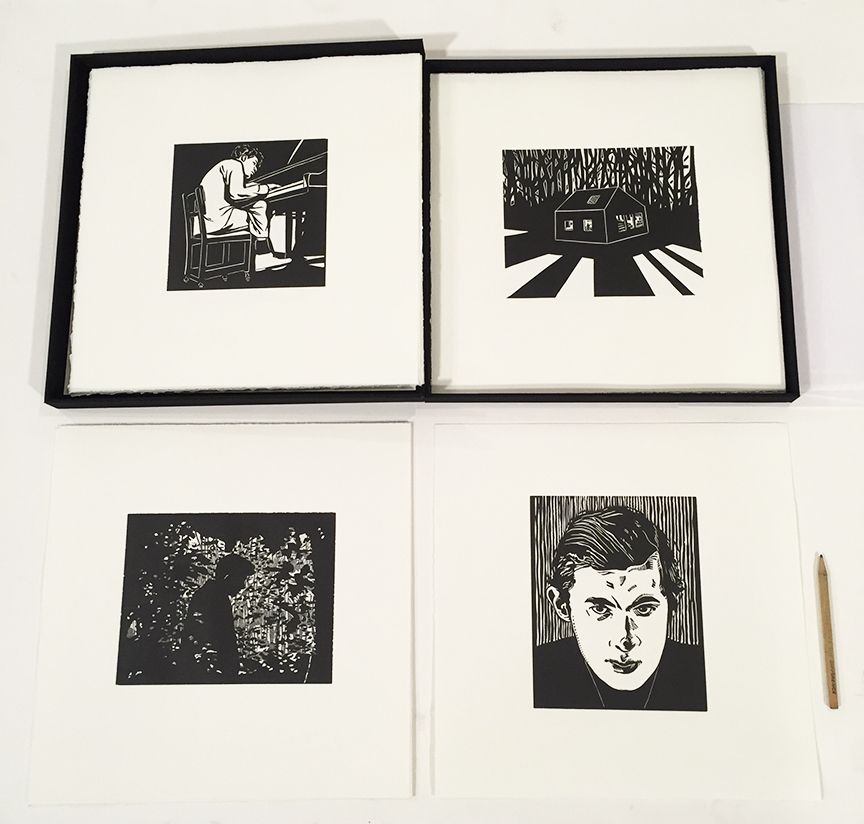
Architecture of Music is a visual statement depicting Glenn Gould’s relationship to the stage, the recording studio, and the solitude he sought “up north.” It is presented in a handcrafted archival portfolio are 30 original black and white linocuts, in an edition of ten. For inquiries please visit stefanberg.ca or contact stefanberg.ca@gmail.com .

From the Introduction to Architecture of Music
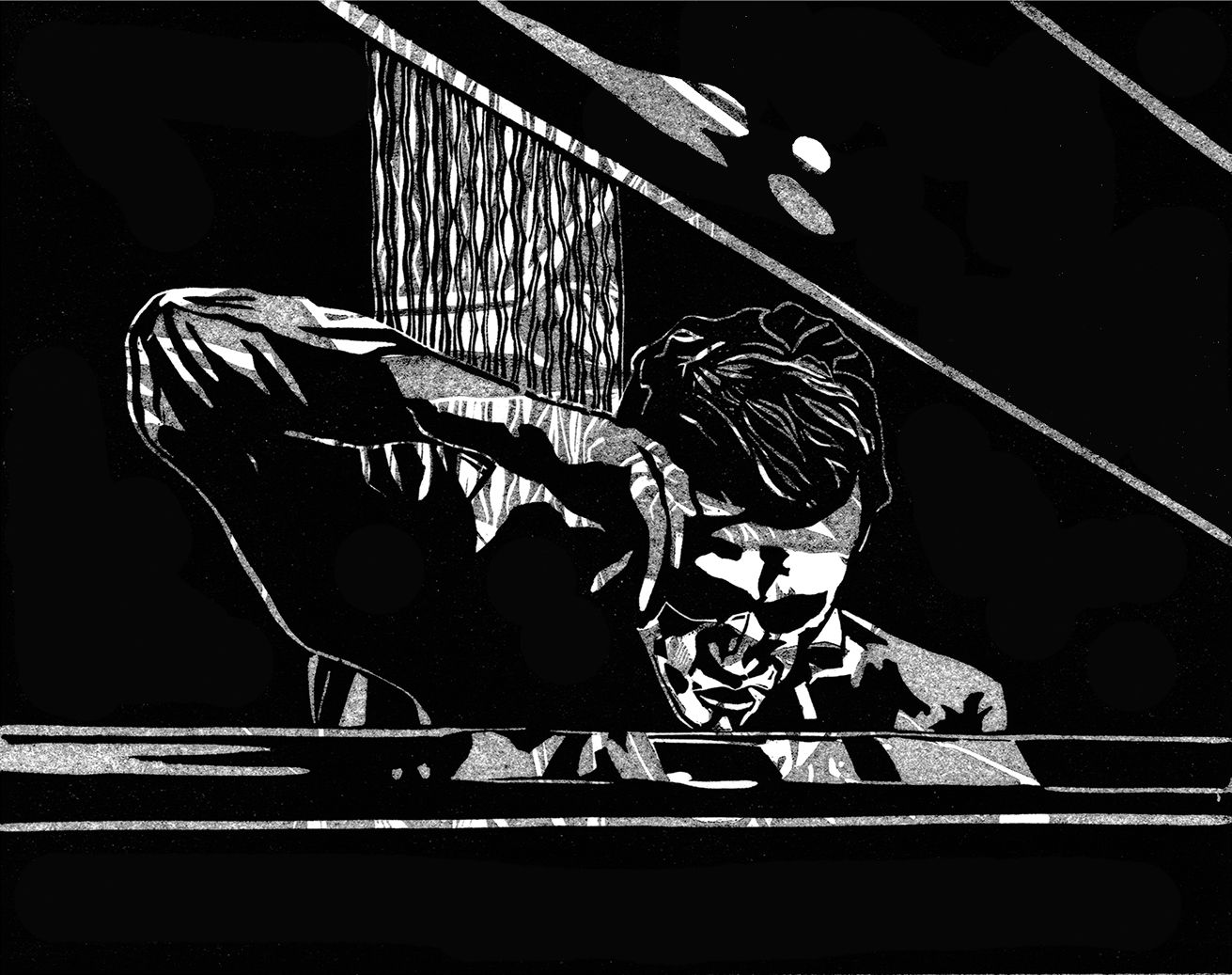
“Listen to Glenn Gould’s first recording of J.S. Bach’s Goldberg Variations in 1955, and compare it to his last recording, of the same score, in 1981. This contrast exemplifies the infinite variations within what Gould referred to as “the architecture of music.” This project explores the resonances between Gould’s art practice and my own. Music is linear, temporal, and interpretive. It expresses ideas and emotions through rhythm, melody, harmony, tonality. The “architecture of music” refers to the makeup of music: the composition, the equation, the many parts which come together to form a whole experience. Gould was constantly rethinking the makeup of music, re-imagining the scores of Bach, Mozart, Beethoven, Schoenberg. With great conviction, he quit performing his music on stage at the age of 31 to focus on the new technology of recording. This allowed Gould to further emphasize the interpretive aspects of his craft. Consider the acts of recording in a controlled environment, compared to performing on stage before a live audience, or creating a new interpretation of a pre-existing score in solitude. I encourage you to read this portfolio as Gould would a score, inserting your own tempo and interpretation.”

About the Artist
Stefan Berg lives and works in Toronto and Bruce County. He received a BFA from OCAD University in 2008, along with the Solomon Painting Award and the Eric Freifeld Drawing Award. Berg has exhibited in Canada, the United States and Europe. His work has been featured in the Globe and Mail, the Toronto Star, and the Telegram Journal. He would like to acknowledge the support of The Canada Council for the Arts, The Ontario Arts Council, The Toronto Arts Council, The Chalmers Family Fund, and The Access Copyright Foundation.