R. Murray Schafer, first Glenn Gould Prize laureate, dies at age 88
August 16, 2021
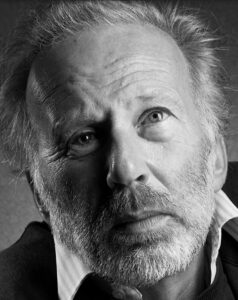
Raymond Murray Schafer, the acclaimed composer, theorist, and musical environmentalist died on 14 August 2021, after a lengthy struggle with Alzheimer’s Disease.
Heralded as one of the most creative, non-conforming and prescient musical minds of our time, R. Murray Schafer was a trailblazing innovator whose career embodied a commitment to two qualities he most valued: curiosity and courage. Coining the term, “Soundscapes,” the Sarnia, Ontario native explored the relationship between the ambient sonic universe and musical composition, creating an original aural language that has proven both influential and inspiring to two generations of musicians and music-lovers. Schafer was also a dedicated teacher and theoretician whose ideas were published in books, including The Soundscape: Our Sonic Landscape and the Tuning of the World, My Life on Earth and Elsewhere, Creative Music Education and The Rhinoceros in the Classroom.
A prolific composer, Schafer wrote for a wide array of performing forces: chamber and choral music, symphonic repertoire, solo voice, piano, electroacoustic music, and immense works that combined music, ritual and theatre. Schafer demonstrated the monumental vision and scope of his creativity in Patria, a 12-part series of music theatre experiences, framed by a prologue and epilogue, composed over a 40-year period, including segments intended for outdoor performance, and inclusion of the audience as participants. Long before the term was commonly used, Schafer was pioneering immersive music theatre.
Originally drawn to painting, Schafer settled on music, and in 1952 entered Toronto’s Royal Conservatory, studying piano with Alberto Guerrero, harpsichord with Greta Kraus, and composition with John Weinzweig. He also had contact during this period with Marshall McLuhan, whose ideas on “acoustic space,” were to have a strong impact of Schafer’s evolving ideas. Ending his formal studies in 1955, Schafer continued studying on his own, exploring a fascination with languages, literature, mythology and philosophy. This autodidactic path led him to Vienna in 1956 and London in 1958, where he supported himself through journalism and by preparing a performing edition of Ezra Pound’s 1921 opera, Le Testament, which received its world premiere in a 1961 BBC broadcast.
Returning to Canada he organized the Ten Centuries concerts, and began a 12-year teaching career, initially as artist-in-residence at Memorial University (1963-65) and then at Simon Fraser University (1965-75), where he initiated the World Soundscape Project, bringing together a dedicated group of young composer-researchers to explore that auditory environment as a true and vital element of human and natural ecology. In one of the project’s publications, The Book of Noise (1970), Schafer set forth a manifesto on the importance of sound in the natural and human world:
The soundscape of the world is an important part of our environment. As in other areas, we have discovered rather dramatically that we cannot go on dumping sonic sewage indiscriminately without some dangerous consequences.
In another publication, The Music of the Environment, he announced his intention “to treat the world soundscape as a macrocosmic musical composition” and his role as a composer as being to “search for the harmonizing influence of sounds in the world about us.”
Schafer’s engagement with soundscape had a profound influence on his composition. He moved to an Ontario farmhouse to draw inspiration from what he described as a “high fidelity soundscape,” and began developing music with outdoor performance and non-traditional placement of performers in the landscape, as in his Music for Wilderness Lake, which deploys 12 trombones around a small lake.
Beginning with early compositions that show the influence of neo-classicism and post-romanticism, Schafer began in the 1960s to incorporate elements of serialism and other contemporary stylistic techniques, but his language remained distinctive and original. In the 1960s he began drawing inspiration and thematic ideas from a wide range of sources, with a particular fascination for mysticism, both Western and non-Western. These included The Tibetan Book of the Dead, the poetry of Rabindranath Tagore, the sun-worship of Pharaoh Amun Ra, Hesiod, Homer, Melville, nature worship, and Zoroastrianism. These influences combined with a desire to create a more communal and emotionally powerful musical and theatrical experience resulting in works that turned audience members into active participants, as in the dusk-to-dawn Ra (Part VI of Patria), which re-creates the descent into the underworld and rebirth of the Egyptian god of the sun. Schafer’s daring break of not only the fourth wall of the theatre, but all the walls, remained one of the most original and powerful elements of his work, right up to his 2009 immersive opera, The Children’s Crusade.
For a mind like Schafer’s, filled with the sonorities, complex rhythms and spatial information derived from his soundscape explorations, traditional musical notation was grossly inadequate, so he evolved his own graphical scoring methods:
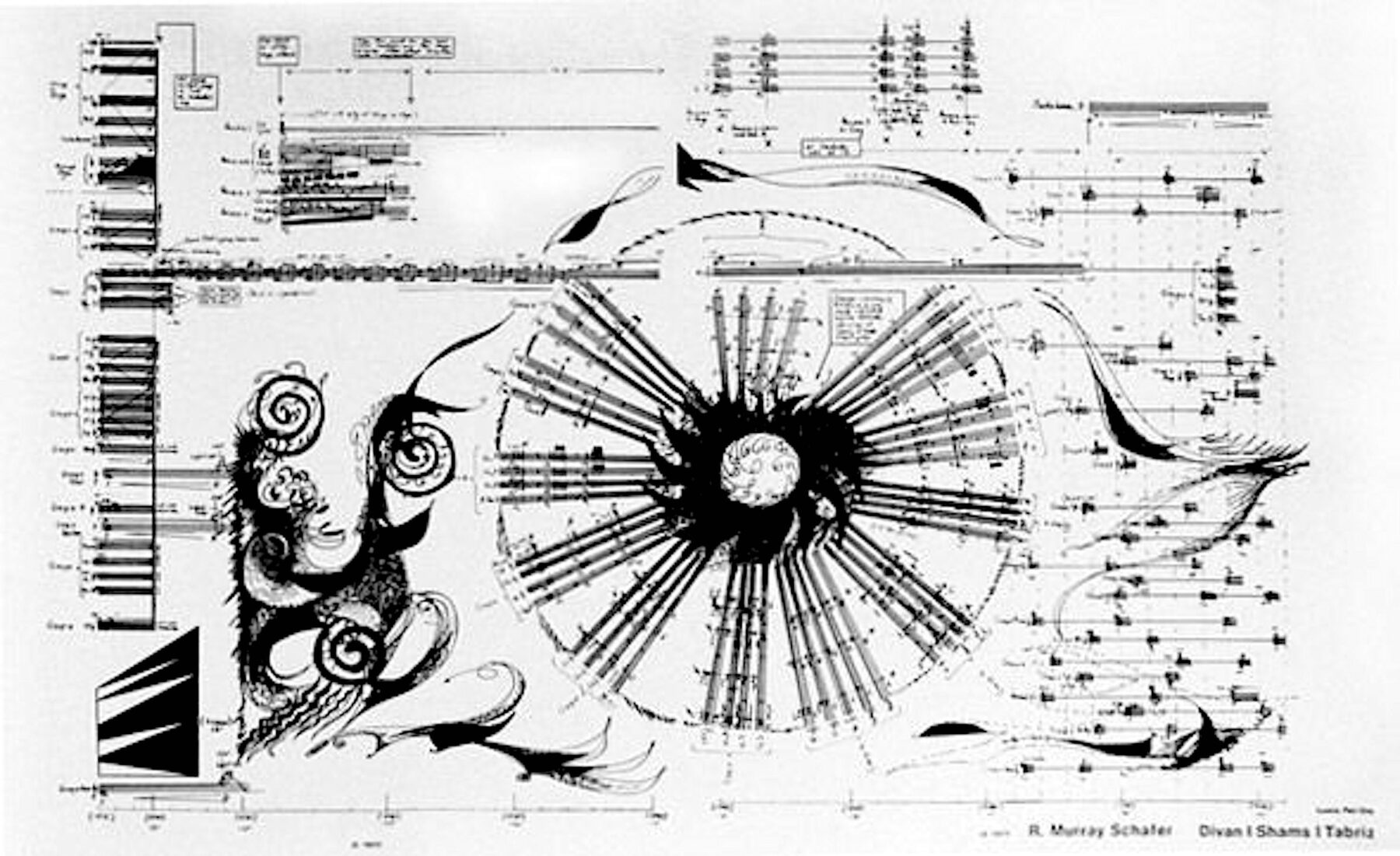
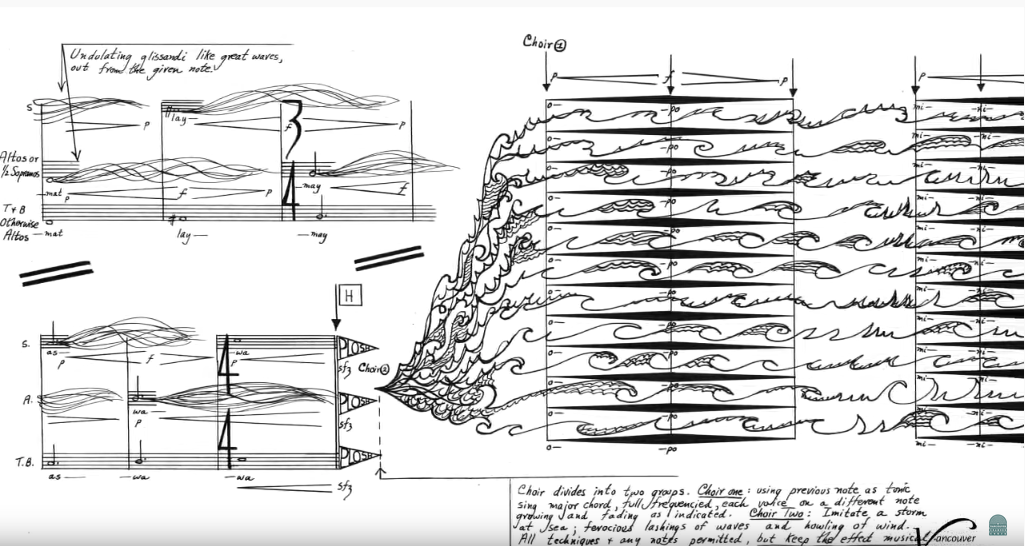
…much to the consternation of many musicians who sought to stay faithful to the composer’s conception. Fortunately, Schafer was actively involved in many of these performances.
Schafer also has had a lasting impact on music education, pointing the way to vital new approaches to learning music, “creative listening,” and inspiring deeper engagement in students, through experiment, play and what he called “ear cleaning exercises.”
Whether for solo instrument or voice, string quartet, or 500-member arsenals of singers and instruments, R. Murray Schafer remains one of the great musical originals, a maverick spirit who can rightly be placed alongside those mavericks who have changed the way we hear the world.
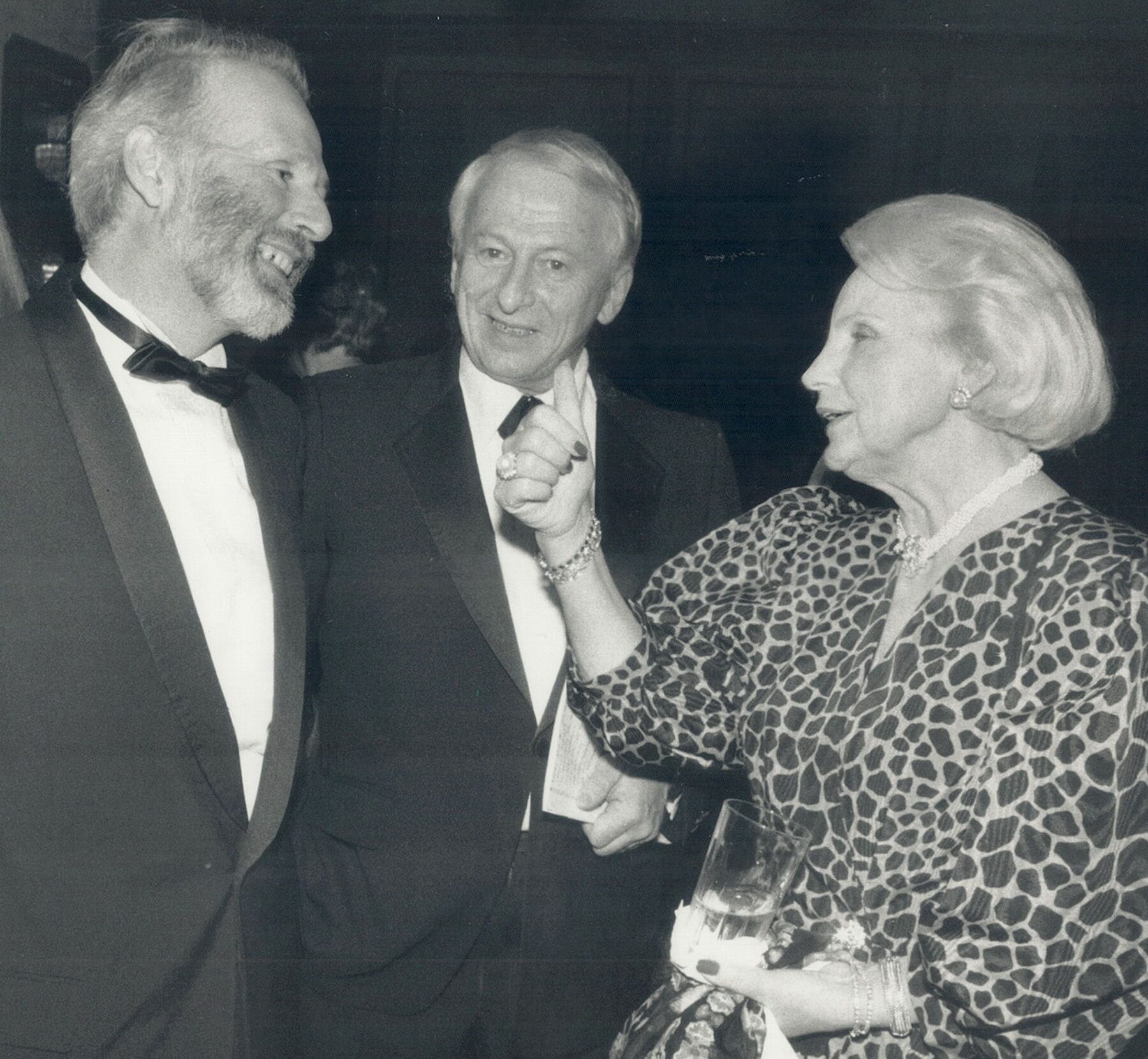
The Glenn Gould Foundation was proud to honour him as the inaugural Glenn Gould Prize laureate, and were in complete agreement with host and prize juror, Yehudi Menuhin, in recognizing his “strong, benevolent, and highly original imagination and intellect, a dynamic power whose manifold personal expressions and aspirations are in total accord with the urgent needs and dreams of humanity today.”
Our deep sympathies to Eleanor, to his family, and to the legion of friends, collaborators and performers whose life and musical soundscapes Murray enduringly enriched.
Today all sounds belong to a continuous field of possibilities lying with the comprehensive dominion of music. Behold the new orchestra: the sonic universe! And the musicians: anyone and anything that sounds!
When you listen carefully to the soundscape it becomes quite miraculous!
– R. Murray Schafer