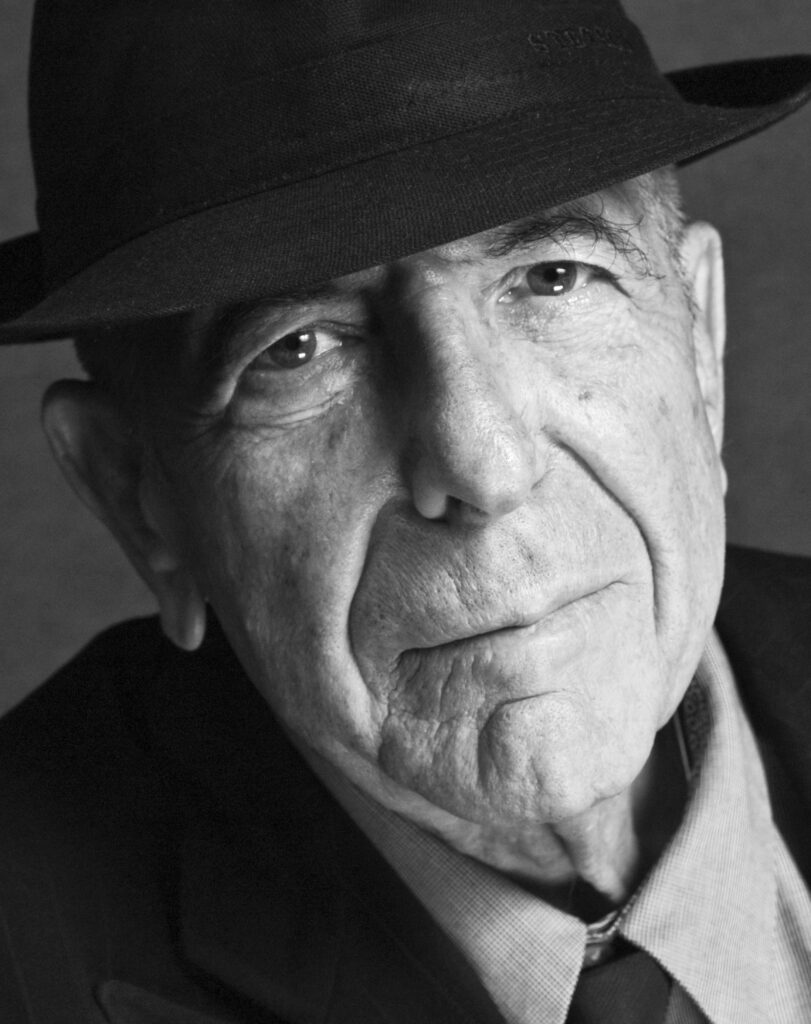
Jessye Norman – A Towering Presence in Music and the Human Family
October 1, 2019
“I am so deeply saddened by this loss. Jessye Norman was an icon, an incredible artist, and an inspiration to so many. She was also an extremely generous and kind person. She was a great talent, supremely intelligent, and a true wit. She was fierce, inventive, funny and great with words, both sung and spoken. I will miss her.”
– Cécile McLorin Salvant, Glenn Gould Protégé Prize winner, 2019, chosen by Jessye Norman
Like the entire musical world, The Glenn Gould Foundation was saddened to learn of the death yesterday of Jessye Norman at the age of 74.
She will be remembered as one of the transcendent vocal artists of our time; many of her performances in opera, with orchestra, or the lieder repertoire, whether live, on recording or on film, stand as touchstones against which all others are compared. She defied classification, mastering roles from Mozart to Wagner, from Schubert to Strauss, seemingly without regard to the standard vocal range categories.
Her musicianship was riveting. With an economy of movement and theatrical artifice, she could transport the listener to inner spaces that were in turn tragic, tender, playful and profound. Has another singer expressed the aching resignation of Strauss’s Four Last Songs with such poignancy, or the passionate release of Isolde in the Liebestod with the same degree of intensity?
Throughout her career, Ms. Norman set an uncompromising standard for herself and those she collaborated with. Coming from the segregated South, she carried a burden joyfully, to represent not only her own talent, her family’s pride and hopes, but the accomplishments of her people at such an extraordinary level as to silence any doubts about their capacity to excel. For her, having an exceptional instrument and knowing how to use it was just the starting point; she had the intelligence, curiosity and connection to a higher set of ideals as an artist to transform her natural vocal gifts into a vehicle that could transport the listener anywhere. I remember the director Robert Wilson recounting a performance he staged of Schubert’s Winterreise with Jessye Norman at the Théatre du Châtelet in Paris immediately after the 9/11 attacks. Wilson told how she conveyed her grief through a solid minute of silence that held the audience transfixed. “Now that,”said Wilson, tearing up at the memory, “is acting.” One critic wrote, “ Listening to Jessye Norman is like discovering a new dimension — with a voice that knocks you back on your heels and a theatricality that is nothing short of spectacular.”
If Jessye Norman had only been a supreme vocal musician, it would have been a great deal, but she was much more. She had a foundational belief in her mission as an artist: “I am deeply spiritual; I revel in those things that make for good – the things that we can do to shed a little light, to help place an oft-dissonant universe back in tune with itself…” Equally, she recognized her responsibility as a human being and global citizen to use her fame as a force for good in the world, once saying, “There has never been a time when I was not committed to, involved in, or caring of, the social and political issues of my world.” She was as good as her word, giving her time, energy and advocacy to a dizzying array of causes, whether singing for the release of Nelson Mandela from Robben Island at Wembley Stadium, working for literacy and serving as a trustee of the NY Public Library, AIDS research through the Elton John Foundation, Lupus and breast cancer research, or selling Girl Scout cookies (she claimed to have sold 200 boxes in one season). Perhaps her proudest achievement was her role in establishing the Jessye Norman School of the Arts in her home town of Augusta, GA, which gives the life-building experience of artistic creation and performance to economically disadvantaged students.
Just next week, Augusta and the Jessye Norman School were scheduled to welcome Ms. Norman back home to celebrate the naming of a street after her.
No wonder she came to be seen as a living symbol of the struggle for human rights and human dignity, the unity of all people, and the fight for freedom, as shown by her unforgettable performance of La Marseillaise to an audience of over a million in the Place de la Concorde for the bicentennial of the French Revolution, her performances at Presidential inaugurations and at the Nobel Peace Prize ceremony for President Jimmy Carter.
Above all, Jessye Norman was a proud African American. She said, “my roots are from Africa . . . my French is pretty good, but I’m still African, thank you very much.” She took great joy in Spirituals and performed them with the same dignity, power and conviction she brought to Mahler. She later explored jazz and the blues. Her example has inspired a generation of African-American (and African) singers to pursue careers and believe in their potential to achieve success and contribute to the world through music.
It was a deeply moving honour for The Glenn Gould Foundation to host Ms. Norman in Toronto for 12 days during Black History Month earlier this year as we presented her with the 12th Glenn Gould Prize.
She was kind enough to share that this honour was very meaningful to her because of her admiration for Gould, and her relationship with Canadian impressario and Toronto Symphony General Manager Walter Homburger (who we also sadly lost, just a few weeks ago). Before going on stage to receive the Prize, she earnestly said to me, “receiving this award has really put the wind back in my sails.” The artists who performed for her gala all expressed to me what a powerful influence Jessye Norman had been on their musical lives; conductor Donald Runnicles, General Music Director of the Deutsche Oper Berlin, where Ms. Norman began her operatic career, confided, “ I’d travel to the ends of the earth for that woman.”
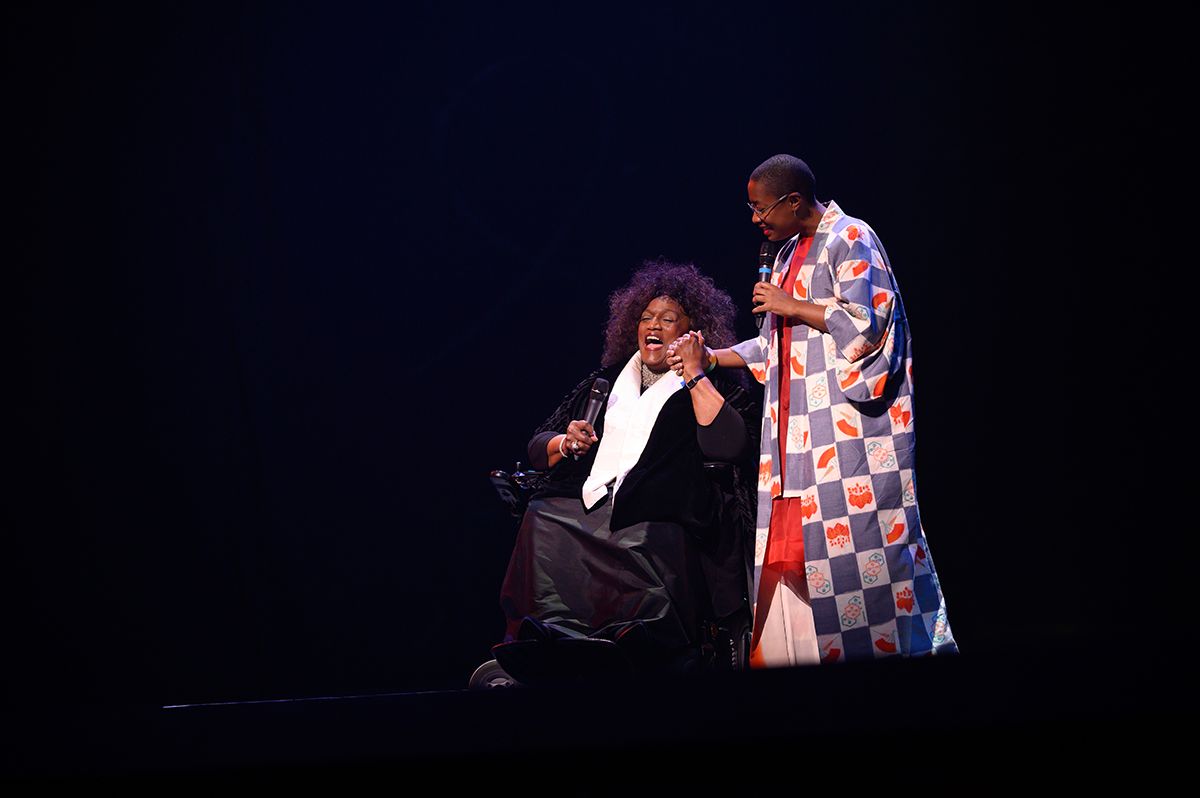
It was especially rewarding for the Foundation to bring students and teachers from the Jessye Norman School of the Arts to Toronto to engage in workshops with their peers at Sistema Toronto, and for the combined group to attend the Prize gala concert with the Canadian Opera Company orchestra, sharing in Ms. Norman’s joy. The highlight of the evening was Ms. Norman’s duet (believed to be her last public performance) with her chosen winner of The Glenn Gould Protégé Prize, Cécile McLorin Salvant. Of their performance of “Somewhere” from West Side Story, the editor of Whole Note wrote:
“The words ‘There’s a place for us’ as hard-won manifesto took on a meaning richer and deeper than the song’s creators could ever have imagined. As to whether there was a dry eye in the house, I couldn’t really see at that moment, for some reason.”
After the concert, the children mobbed her, hugged her and wanted to share their stories with her. Jessye simply beamed – her love, enthusiasm and heartfelt pride in these exceptional children filled the house. The memory is especially poignant because her anticipated reunion with the Jessye Norman School students in Augusta next week now will not happen, making this their last encounter with the extraordinary woman from whom they drew such inspiration.