An Invented, Super-Mythical, Social Distancing, Operatic Glenn Gould
July 10, 2020
“the loser” by David Lang
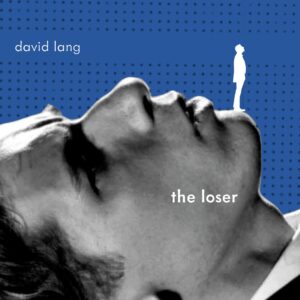
It is so funny that The Glenn Gould Foundation should ask me to write an article about social distancing. I am uniquely qualified, since it turns out that I have written the ultimate social distancing opera – a fully staged production for only one singer, in which the accompanying live musicians are never seen. And the funniest thing about asking me to write about my opera? It stars Glenn Gould.
Not the real Glenn Gould. The mythical Glenn Gould. And not even the real mythical Glenn Gould, but a specially invented super-mythical Glenn Gould. I will explain.
My opera “the loser” – commissioned by the Next Wave Festival at the Brooklyn Academy of Music – is based on a novel by the Austrian writer Thomas Bernhard. The original title of the novel Der Untergeher means “the one who goes under,” but the book was translated into English as The Loser and that is how I found it. The novel was published in 1983, translated into English in 1991, and I read it in 1998.
I was immediately hooked by its power, especially the disorienting energy of the narrator. Written in the first person as a continuous stream of jumbled information – one giant paragraph – and changing its focus and time and location and perspective and subject matter with almost every other sentence, it really felt like a rant to me: a condescending, angry, smart, rich, witty, not very nice man ranting about his life.
Excerpt from David Lang’s the loser scene II, thanks to Bill Murphy, Cantaloupe Music.
An excerpt from Scene II, “glenn is the victor”; and an excerpt from the concluding piano solo (a bonus track on the album) “for glenn gould” performed by pianist Conrad Tao.
I was drawn to the tightness of the language, the intensity of the character, and to the self consciously indirect way the story is told, but most of all I was drawn by the subject matter. The novel tells the story of a man, never named in the book, who wanted to be a concert pianist when he was young. He was good enough to participate in a master class with Vladimir Horowitz, but in the same class was a young Glenn Gould, and the knowledge that Gould would always be a better pianist than he could ever be destroyed his life, and the life of his best friend, Wertheimer, who was also in the master class.
Here you are probably thinking: Wait a second! Glenn Gould didn’t study with Horowitz. What gives?
The shadow of the invented mythological Gould hovers over every aspect of the novel. He is the key to the friendship between the narrator and Wertheimer, and the key to their downfall, and they talk about him and fantasize about him and write about him and compete with each other over scraps of their memories of him. In the course of the book we learn what some of those memories are, of Gould’s performances and triumphs and witticisms and diseases. Almost none of them are true.
Well, not true of Gould, but true of Thomas Bernhard.
Like his narrator, Bernhard trained to be a musician, before a health crisis forced him to give it up. Many parts of the novel are autobiographical, and many of the odd, fake details about Gould are in real life, facts about Bernhard himself. Most of these details are tiny – about various diseases or locations, but the cumulative effect is powerful. Bernhard projected his own sense of musical disappointment onto all the characters in the novel, including Gould, and his disappointment is fundamental to the narrative. Not only does it feel authentic throughout, but it also plays into a musician’s deepest fear: that he or she will never be good enough.
In addition to being the composer of this opera, I was also the librettist, and the stage director. I had a very personal connection to reading the book and I wanted to preserve that, to make sure that my own reading and reactions remained the center of the piece. I really wanted to make the viewing of the opera feel just like the reading of the book, to emphasize as much as I could that we were in the presence of the narrator, that he was speaking to us directly, and that there was nothing to distract us from paying complete attention to him – no fancy set, no other characters, no visible musical accompaniment. Just a man, telling us his very personal, very funny, very disturbing story.
And this is where the social distancing comes in. The narrator constantly talks about his distance from society, from Gould, from his emotions, from his world. For the staging I wanted to make that distance physical – I really wanted us to feel the separation that the narrator feels from Glenn Gould, from his world, and from the life that he did not lead.
I made that feel physical by deciding to seat the audience only in the balconies of opera houses, making the ground floor orchestra sections into vast, empty voids. Rising up from the empty ground floor is a tiny platform, just in front of the edge of the balcony, and on that platform stands the narrator, in a spotlight – everything else around him is darkness. It seems like the narrator is floating in space, telling us his story, within the giant void of the empty hall. The conductor and the musicians accompanying him are hidden below, out of sight. There is nothing to interfere with the directness of our connection to the narrator. He is the story.
Of course, about two-thirds of the way through the piece something else happens. The stage behind him begins to glow, revealing a piano floating in the air. A pianist begins to play, a very delicate and simple music. We can’t hear it very well, because in front of us a man is singing, very intensely and directed right at us, about his miserable life. What I hoped we would feel by staging my opera this way is that there is something blocking our path to appreciating the beauty of the piano on stage, just as the narrator’s path to the piano became blocked.
The name of the delicate little piano piece that I composed for the end of “the loser?” I called it: “for glenn gould.”
I should add here that a great recording of the opera has just come out on the Cantaloupe label, performed by the original stars. The elegant and sensitive pianist is the young virtuoso Conrad Tao. And the narrator is sung powerfully and heroically by the great Rod Gilfry. I couldn’t have done it without them.
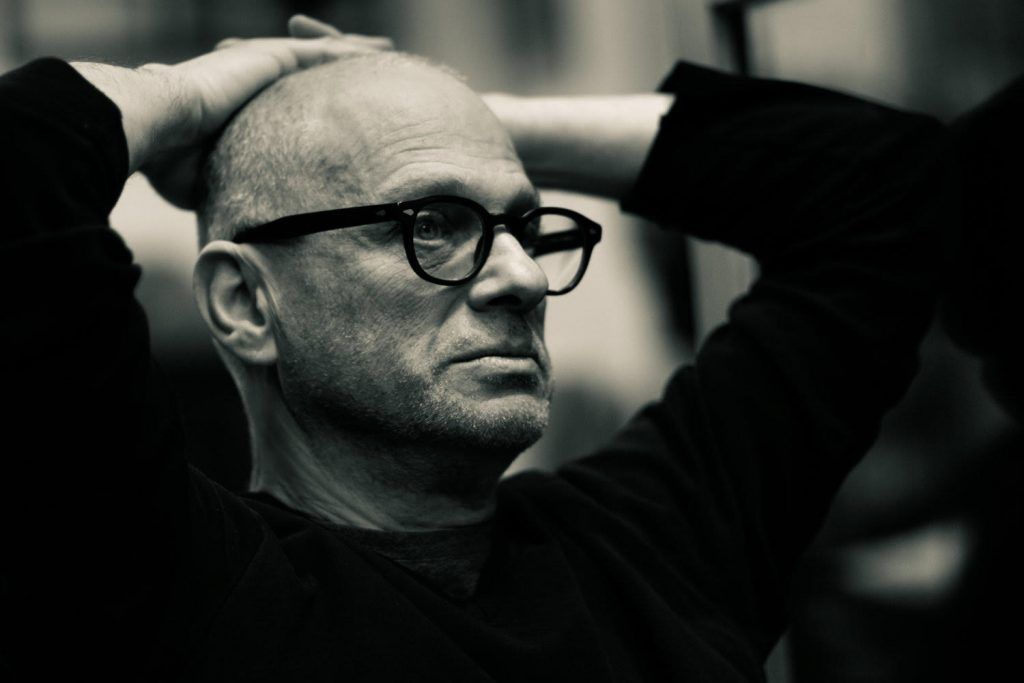


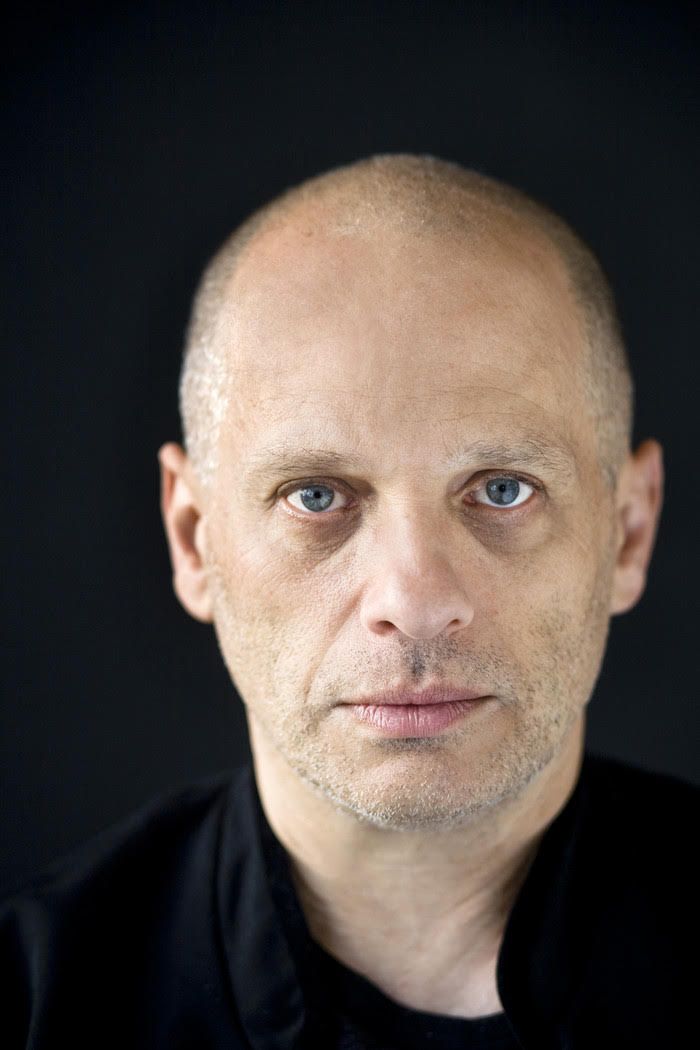
In the words of The New Yorker, “With his winning of the Pulitzer Prize for the little match girl passion (one of the most original and moving scores of recent years), Lang, once a post-minimalist enfant terrible, has solidified his standing as an American master.”
Lang’s score for Paolo Sorrentino’s film Youth received Academy Award and Golden Globe nominations, among others. Other recent work includes the mile long opera, for 1000 singers on The High Line in NYC; man made, a concerto for So Percussion and orchestra, co-commissioned by the Los Angeles Philharmonic and the BBC Symphony; his opera anatomy theater, written in collaboration with visual artist Mark Dion, at Los Angeles Opera; the public domain, a commission from Lincoln Center for 1000 amateur singers; and his opera the loser, based on the novel by Thomas Bernhard, which opened the 2016 Next Wave Festival at the Brooklyn Academy of Music, and for which Lang served as librettist, composer, and stage director. His opera prisoner of the state, co-commissioned by the New York Philharmonic, Rotterdam’s de Doelen Concert Hall, London’s Barbican Centre, Barcelona’s l’Auditori, Bochum Symphony Orchestra, Malmö Opera and Bruges’s Concertgebouw, premiered June 6-8, 2019 at the New York Philharmonic, conducted by Jaap van Zweden.
Lang is a Professor of Music Composition at the Yale School of Music and is Artist-in-Residence at the Institute for Advanced Study in Princeton. He is co-founder and co-artistic director of New York’s legendary music festival Bang on a Can.
__
For more information: