On Gould and Leon Fleisher
March 10, 2021
Did Glenn Gould and Leon Fleisher ever cross paths with each other? How did Gould evaluate Fleisher? And how did Fleisher evaluate Gould? I just wonder whether the two great pianists had a relationship with each other.
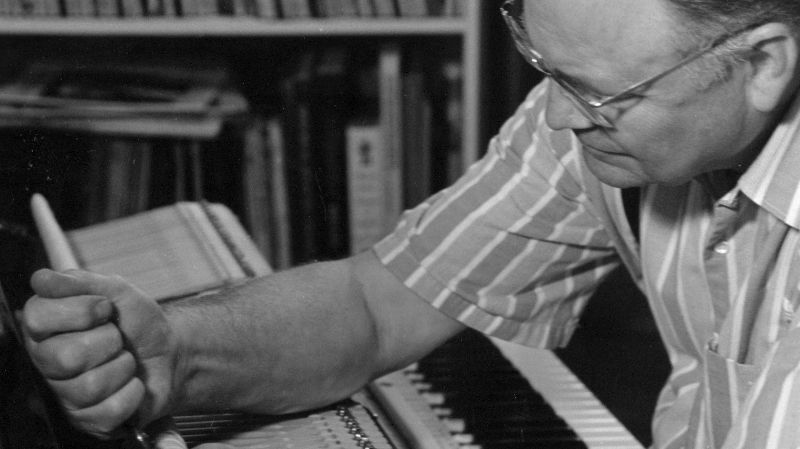
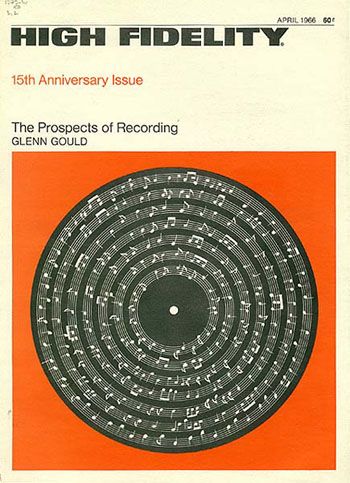
The great American pianist Leon Fleisher died in August of 2020, at the age of ninety-two. He and Gould were indeed personally acquainted. Both were active on the concert circuit at the same time and both recorded for Columbia, so we may assume that they met on the road or in the studio. Fleisher appeared as an interview subject in Gould’s CBC Radio program Dialogue on the Prospects of Recording, which first aired on January 10, 1965. In this wide-ranging program, about the impact on music of the electronic media, Fleisher serves as a foil for Gould: he defends the concert medium, denies that the existence of electronic media changes the nature of an art form, claims that recordings (including his own) merely supplement a concert career, and denies that his recording experiences affect his playing in any fundamental way. The entire eighty-five-minute program has been posted on YouTube; Fleisher’s two-minute segment begins at 48:23.
Sidebar: How Gary Graffman Met Glenn Gould
When Gary Graffman was a juror for The Glenn Gould Prize, he related to me how he met Glenn Gould.
Gary and Leon Fleisher were not only contemporaries, but also close friends. Gary had won the prestigious Leventritt Competition in 1949, and became part of a circle of young artists that Mrs. Leventritt, widow of the founder, gathered around herself.
In early 1955, Gary received a call from Mrs. Leventritt, who said, “I’ve just had a call from an old friend of mine in Toronto, Harvey Olnick, who has urged me to attend the debut of a young unknown pianist from Canada named Glenn Gould – another kid from the sticks coming to ‘Debut Town’ to be discovered, just live everyone else.”
Gould, Olnick assured her, was “really something special,” but worried that as a complete unknown who hadn’t attended one of the elite US conservatories or studied with famous teachers, his debut would take place in an empty auditorium and be a complete failure.
Mrs. Leventritt promised to use her considerable influence to assure a full house, and that notice would be paid in the “right circles” to the newcomer. Accordingly, she called all the young artists, critics and record business people in her directory, and invited them to come to Gould’s Town Hall recital, Tuesday 11 January 1955.
Graffman received one of the dowager’s calls, and was advised to invite Mr. Fleisher, and to spread the word generally among their friends, and also to consider themselves invited to the post-concert reception she was holding for Glenn afterwards. Graffman, a Leventritt Prize winner himself, said, “When Mrs. Leventritt asked you to do something, you didn’t say no – it was more of a command than a suggestion. But her receptions made it worthwhile, because she would always lay on an amazing spread – the best of everything.”
The recital came, and Messrs. Graffman and Fleisher were duly impressed, agreeing that Glenn Gould was indeed, “something special,” (which, considering how hard it is to impress young artists of their calibre in the fullness of their talents and youthful pride, is saying something).
At Mrs. Leventritt’s post-concert reception, Fleisher and Graffman mingled, ate and enjoyed, but wondered where the guest of honour was. They finally saw Gould standing alone in a corner, and decided to be sociable and go over and meet him. Both young pianists approached Gould and introduced themselves, extending a hand (which Gould likely declined to shake).
At the mention of their names, Gould registered a flash of recognition. His face took on a baleful expression and he said, almost accusingly, “I know you. You play . . . Chopin!” Evidently, it was not intended as a compliment!
– Brian Levine
Kevin Bazzana is a Canadian writer with degrees in music history from the University of Victoria, Stanford University, and the University of California, Berkeley. Since the mid-1980s, he has written prolifically about Glenn Gould and has worked on many Gould-related projects: CD and CD-ROM releases, radio broadcasts, conferences, websites. He is the author of Glenn Gould: The Performer in the Work (1997) and Wondrous Strange: The Life and Art of Glenn Gould (2003); edited the Foundation’s Glenn Gould Magazine (1995-2008); and consulted on the documentary film Genius Within: The Inner Life of Glenn Gould (2009).
Do you have a Glenn Gould-related question for Kevin? Submit it here.