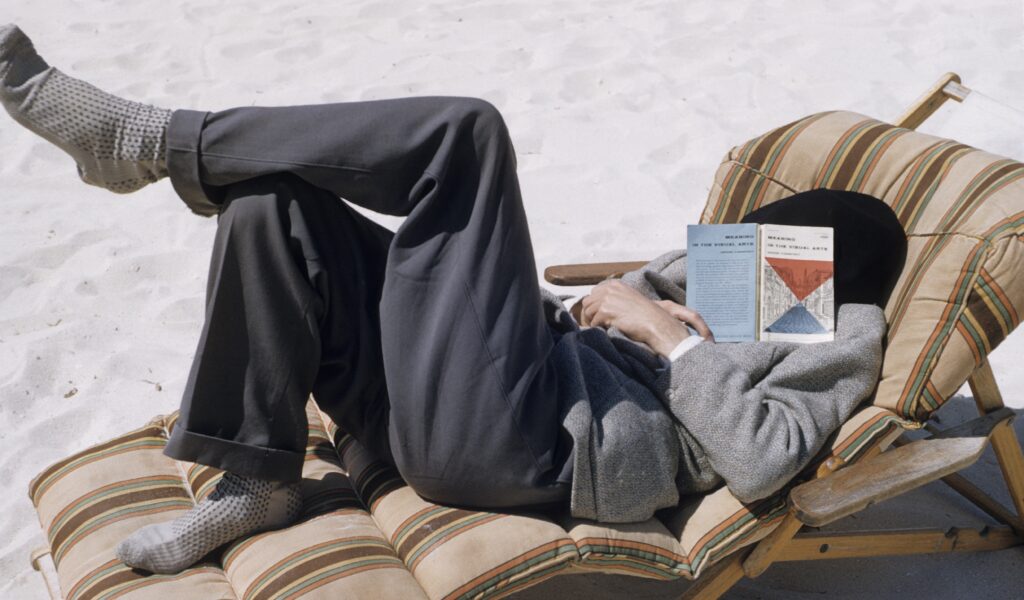
The Two Faces of Glenn Gould: On His Health and Personality
January 24, 2023
Eugenia Biedma
(June 2022)
Glenn Gould is still very much alive. Forty years after his death, he continues to enjoy enormous international attention and prestige, and to provoke considerable debate not only about his exceptional piano-playing but about his ideas and personality—he remains a surprising figure as both musician and man. A truly overwhelming amount of information about him is now available, and new research constantly appears, requiring careful evaluation of sources in order to distinguish proven data from the many, widespread exaggerations and legends about him, the dissemination of which, admittedly, he himself abetted to some degree. In numerous publications one notices misunderstandings about his behaviour and lifestyle based on insufficient evidence, as well as an insistence on rehearsing certain well-worn topics—for instance, his eccentricities.
It is essential to evaluate Gould as a whole, taking a panoramic view in which his physical, psychological, and social aspects are integrated within a particular context. There is an abundance of articles and theses on Gould as an artist, but much less literature centered on Gould the man. My own doctoral dissertation focuses on his health and personality—on Gould as a human being—though also takes into account how these influenced him as a pianist and musician—for instance, how his posture at the keyboard affected his health, or how his personality was reflected in his seeking of perfection in his interpretations. I reviewed the main biographical facts, since his evolution was marked by his specific experiences and to understand the adult Gould requires investigating his roots in childhood. In addition, I extracted data about his personality and about the illnesses and disorders that plagued him by analyzing private documents preserved among his papers in the Library and Archives Canada, in Ottawa. Reading these documents was surprising for me, and gave a new, more human and intimate sense of Gould, whose private life was largely shrouded in secrecy and who felt deeply, but rarely showed this to others. Given the importance of solitude and isolation to his creative development, I also studied the three “contrapuntal radio documentaries” of his Solitude Trilogy (The Idea of North, The Latecomers, and The Quiet in the Land) and his decision to cease giving concerts at the peak of a successful career.
Questions continue to arise about Gould, generating considerable discussion. Take, for instance, that decision to retire definitively from the concert stage, at the age of just thirty-one. The possible causes need to be considered in a multifactorial way. First, there were causes relating to his health and personality: stress, anxiety, stage fright, the discomforts of travel, excessive intake of medication, musculoskeletal problems, and (possibly) symptoms of focal dystonia; Gould himself cited his health as the main reason for his frequent cancelling of concerts. He wanted, and had the means, to choose his own way of life, and felt that his creativity could be better nurtured in solitude; as he once said, “Isolation is the one sure way to human happiness.” Second, there were causes relating to the interpersonal aspect of concert life: his difficult relationship with audiences, his perception of hostility from the public, the public’s demand to hear the same repertoire, the press interviews, and certain controversies—the 1960 incident in which he claimed to have been injured by a greeting from a Steinway employee, for instance, and the 1962 Brahms concerto with Leonard Bernstein. He came to deplore the public’s and the press’s obsession with his eccentricities. These eccentricities were genuine, and he himself was not above using them for self-promotion, but with time his public persona became a kind of exaggerated version of himself, partly real and partly fabricated. Third, there were causes relating to Gould’s desire to change his musical identity: rather than be perceived only or primarily as a pianist, he wanted to undertake projects in composition, recording, radio and television broadcasting, conducting, writing. With recording, in particular, he sought to transform the relationship between composer, performer, and listener—to “democratize” musical culture and bring his work to a new and wider audience. He believed that the performer was a genuinely creative force, and to this end sought a new way of making music and living as a musician.
Or take some of the other issues that have generated considerable debate: Did Gould have autism spectrum disorder? Did he suffer from focal dystonia? Such questions do not admit of simple answers. When it comes to questions relating to Gould’s health and personality, it must be stressed that it is difficult to diagnose him with complete certainty, given the lack of sufficient biographical evidence and the impossibility of thoroughly examining a dead person. In Gould’s case, we lack a clinical history that collects all the necessary personal and family history; we also lack a detailed description of all his symptoms (including information about their onset), and lack sufficient information about the actions of his doctors (confirming medical tests, differential diagnoses, treatments). In medicine and psychopathology, knowing an individual’s symptomatology—especially the most important symptoms—is essential; one must also know the levels of severity of the different symptoms and their degree of stability over time. All necessary diagnostic criteria must be carefully reviewed to reach a diagnosis, according to professionally established protocols, and the individual’s evolutionary development within his specific milieu must be charted—in Gould’s case, for instance, how he adjusted to living alone, or how his back pain made him try out various postures (like crossing his legs) while playing, or how he undertook physical experiments in order to try to solve perceived hand problems.
Making a judgement about the cause of Gould’s ailments is very complicated. One significant obstacle is that we are often not certain whether the symptoms he reported were real or imagined. To be sure, he considered them real, though often seems to have exaggerated them, and his abundant complaints frequently led to medical examinations that did not substantiate his self-diagnoses. Moreover, we must consider that some of his symptoms might have been caused by excessive intake of medication, since he had a harmful and dangerous habit of abusing medications. He sometimes received prescriptions from several doctors at the same time, and would mix medications without medical supervision, not controlling for dosages or paying heed to interactions and contraindications and possible adverse effects.
As a result, a symptomatology cannot be established for Gould with any certainty. The various factors that made up his personality, and the various facets within each of them, cannot be precisely delineated either; the ways in which he organized his world, and the evolution of his personality through time, can be deduced partly but not completely. In order to determine whether a subject has a certain disorder, symptoms must cause him clinically significant distress or impairment in his social, occupational, or other important areas of functioning, and it is necessary for diagnostic information to be stable over time and in various situations. But much of our information about Gould is ambiguous. For instance, we cannot claim definitively that he lacked empathy if he was empathetic with some people and not with others; we cannot assert that he never shook hands if he sometimes did; and we cannot say that he was a hermit and communicated only through letters and phone calls if he had visitors and sometimes went out with friends.
Necessarily, the diagnoses I suggest in my dissertation are mostly conjectures, not proven facts, and I recognize that some things about Gould cannot be known precisely; prudence is necessary in drawing conclusions about him. In my dissertation, I drew on a vast and diverse array of archival documents relating to every aspect of Gould’s physical and mental health. In the present article, I review the results of this research, though limitations of space preclude my setting out all of the data and arguments and diagnostic criteria that led to my conclusions.
Gould enjoyed a salutary upbringing in a safe, comfortable home with affectionate parents who had the resources to attend to all the needs of their much-cherished only child. Though he was a child prodigy as a musician, naturally gifted with outstanding talent and an amazing memory, his mother was decisive in his orientation towards music, his formation as a musician, and his decision to pursue music as a profession. She herself played the piano, and even before her son was born she yearned for him to have a future as a professional pianist. Her own anxiety and maternal fears, especially her constant concern for his health, were also deeply impressed on his personality, and already in childhood he developed certain habits that became ingrained: dressing very warmly, avoiding crowds, protecting his hands against damage. In terms of what psychologists call “imprinting,” Gould’s mother was the person who had the biggest influence on his life.
Gould found attending school an often very unhappy experience, and for a combination of reasons he spent much less time with his peers than was normal for a child his age. He did not attend school at all for Grade 1, but instead studied privately with tutors. He began school in Grade 2 but was frequently absent, and he skipped directly from Grade 2 into Grade 4. In high school he began attending school only in the mornings, devoting afternoons to music and evenings to catching up on homework with tutors. He could not find an appropriate environment for himself at school. He perceived himself to be different from other children, and isolated himself. His schoolmates rejected him and even beat him up, and he learned to use claims of illness (whether true or not) to skip class and stay home. He did not enjoy sports and did not participate in group recreational activities either at or outside school, and during breaks between classes he generally spent his time alone.
As a result of spending relatively little time with his peers and feeling uncomfortable with and rejected by them, his socialization as a child was incomplete and inadequate. Skipping Grade 3 might have benefitted him cognitively, but it made him younger than his classmates, with whom he may not have been prepared to interact emotionally (there is no documentation clarifying his emotional level). Maturation occurs in stages, and intelligence and the emotions do not always evolve at the same rate. In childhood and adolescence, interaction with peers is essential and greatly influences one’s social relationships as an adult; poor socialization in one’s formative years has negative repercussions for the development of one’s adult personality. Gould, as a child, did not adequately develop a sense of belonging to his peer group, and learned to cope with problems at school by fleeing to his home and his piano.
Furthermore, Gould’s mother’s belief that he was very special—her suspicion of the idea of the “child prodigy” notwithstanding—led him to develop an overinflated self-image and encouraged his distance from the interests of others. He was treated differently, and so felt different from others, a characteristic that he bore from childhood into adulthood. Consequently, his socialization was somewhat conflicted, as evidenced by behaviours and social skills he learned early on and largely maintained in his adult social interactions—for instance, using his health as a reason for cancelling concerts, avoiding people who had ideas different from his, and isolating himself at the piano as a means of emotional support and in order to defend himself in potentially threatening situations. Gould, like many gifted people, might have experienced a certain asynchrony—i.e., a mismatch between his cognitive and socio-emotional development—with roots in his childhood. As a child his cognitive age may have been much higher than his emotional age, and being with older classmates may have forced on him an accelerated socio-emotional maturation that is not advisable in children, whose rate of socio-emotional maturation should ideally correspond to their natural development.
The adult Gould had few real friends—he loved animals, and claimed to trust them more than he did people—and once he moved out of his parents’ house, in his late twenties, he lived alone. He never married or had children, and the relatively scant evidence regarding his romantic relationships has led to a variety of speculations—for instance, that he was asexual and virginal, or homosexual, or unable to love anyone or maintain a stable relationship. In reality, he had romantic relationships with several women, the most serious and lasting being with Cornelia Foss, a quasi-marital union that lasted for several years in the late sixties and early seventies but was also marked by periods of suffering and enormous strain leading to a definitive rupture. His hyperintensity in love affairs is revealed in his private notebooks, in which he describes feeling something similar to an addiction, with persistent efforts to maintain contact, and highly significant obsessional and unilateral insistence on attachment and emotional dependence. In such situations, when feeling some kind of physical or psychological discomfort, he tended toward pharmacological solutions, especially abusing tranquilizers; Cornelia Foss, as she noted in interviews, observed him taking up to ten Valium tablets a day.
Gould was highly organized. Though the spaces in which he lived were messy, and his sleeping and eating habits were poor, his life was orderly and planned, his activities thoroughly scheduled. His art could be explosive, but his daily life, once he retired from concerts, was predictable, monotonous, emotionally suppressed. Even when his lifestyle seemed chaotic and disjointed, in his mind everything was perfectly structured and controlled. The many private notepads that survive bear witness (despite the messy, often incomprehensible handwriting) to his organization. Among them, for instance, are hundreds of lists of all kinds, mathematical computations of various kinds, and other writings that testify to his perfectionism, meticulousness, control, planning, motivation, and perseverance and show how punctilious and precise he was when it came to his work.Gould’s notepads and other private papers are also very revealing from a medical and psychiatric point of view: among them are medical records and reports, lists of questions and suggestions for his doctors, self-diagnoses, and many pages on which he recorded his symptoms, medications, blood-pressure readings, sleep patterns, body temperature, and other data. These papers amply document his constant and intense anxiety about his health, his many fears, his hypersensitivity, and his desire to quantify his knowledge about his health status, evidently in an effort to control it.

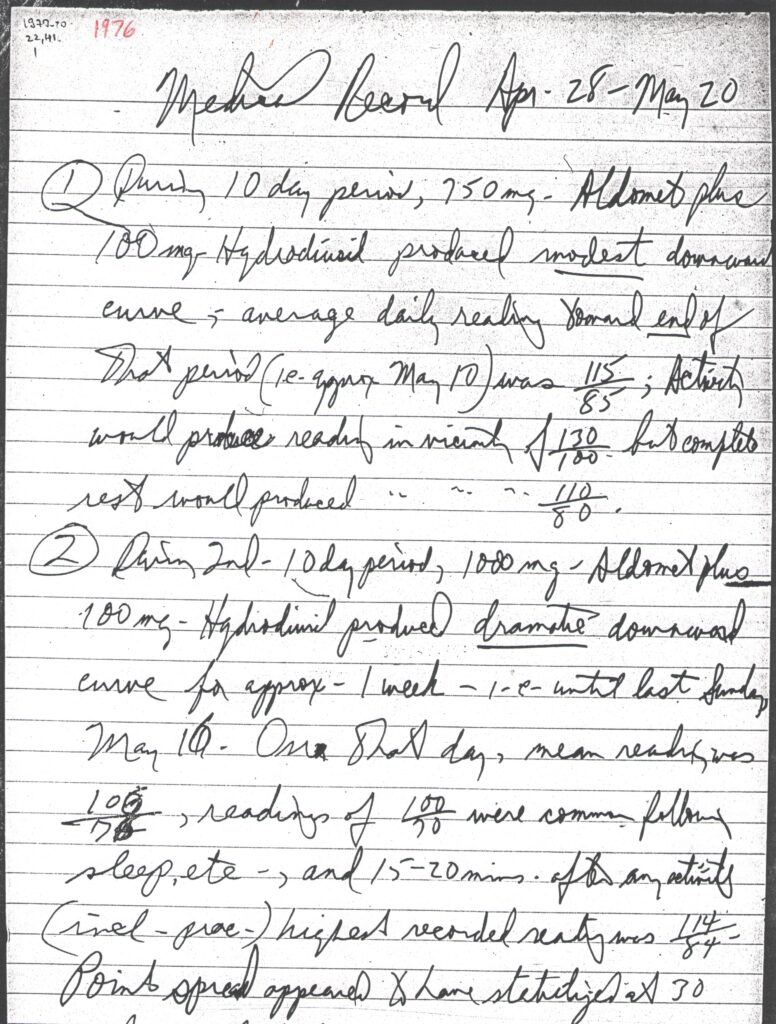
He had particular anxiety about his blood pressure, which he took himself at home, sometimes as often as thirty times a day—significant evidence of his enormous concern for his health. He devoted many pages of his notepads to monitoring his BP and to details about how his BP varied depending on what he was doing at different times of the day; he wrote down everything, noting even the slightest changes. Many of his BP values are normal, but he did tend toward hypertension, mainly in the diastolic values, especially in his later years. He also made notes about the anti-hypertensive drugs he was taking—the dosages he took and the effects and complications he observed.
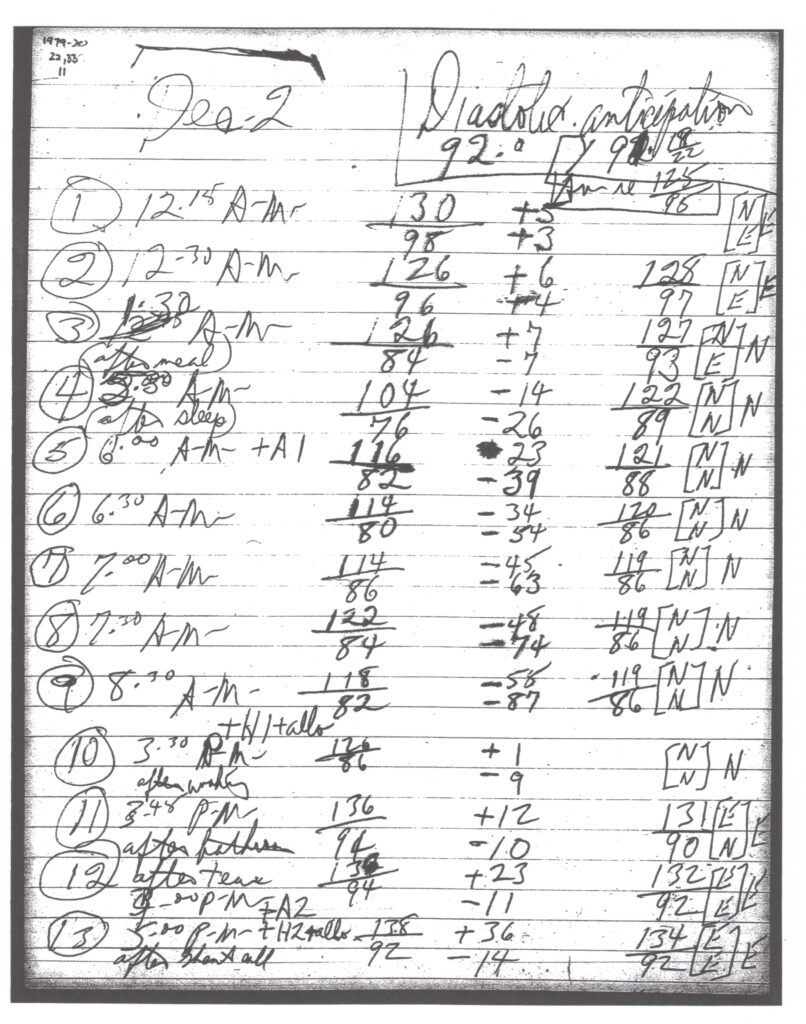

He was similarly meticulous about documenting his sleep patterns, minutely noting the times he fell asleep and woke up each day and the number of hours he slept, and comparing these numbers over various periods of time. In surviving pages from the mid-1970s, the average amount of daily sleep he recorded ranged from six and a half to seven and a quarter hours, which is a reasonable amount for an adult, though his was not restful sleep, as it was often irregular: some days he slept less, other days more, and often his sleep was broken up by frequent wakening. He had difficulty falling asleep, a possible indication of anxiety, and the lack of restful sleep could be interpreted as a depressive symptom. Also, he maintained a reversed sleep-wake cycle—that is, usually sleeping by day and staying awake at night. He sometimes slept in a bed, sometimes in an armchair, sometimes with the radio or television on. All such information he wrote down, occasionally alongside data about medications, meals, and details of why his sleep was interrupted. On some pages he drew lines and brackets that seem to be efforts to find some pattern or sense in his sleep data, and apparently to understand the factors influencing his sleep and how he might control them.
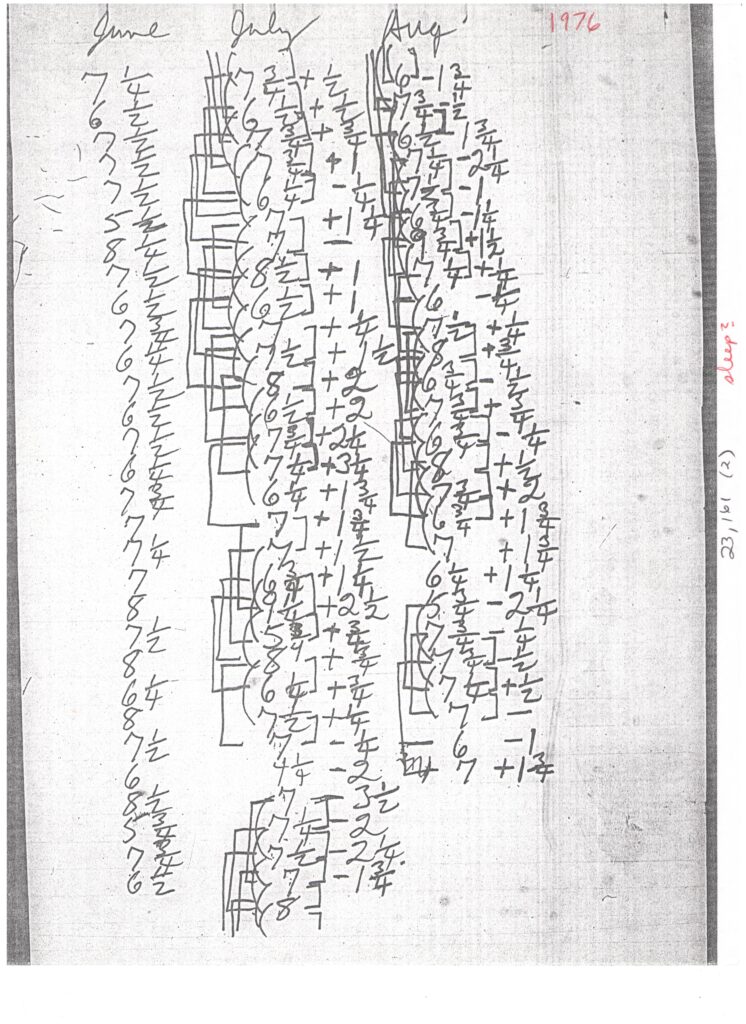
(In both the blood-pressure and sleep documents, incidentally, Gould often made idiosyncratic notations and undertook analytical calculations of various kinds, often apparently with the intention of determining averages over different periods of time, or otherwise trying to deduce patterns within the data. In my dissertation, I analyze these calculations in considerable detail.)
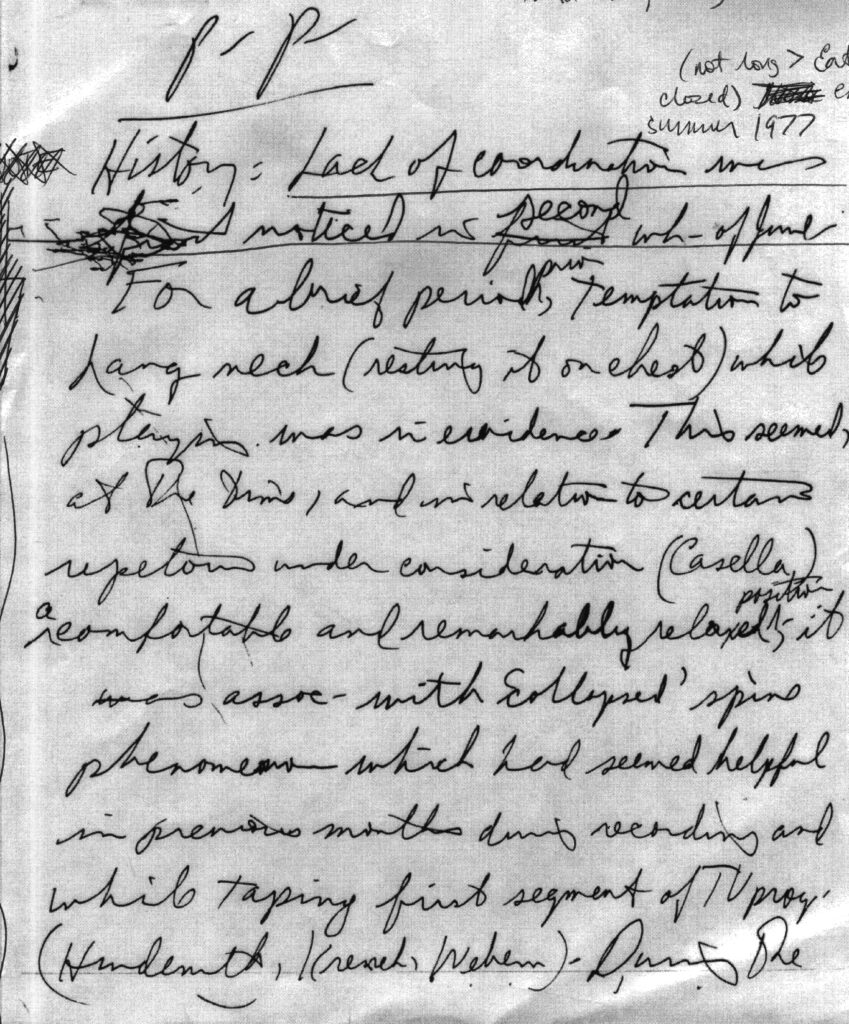
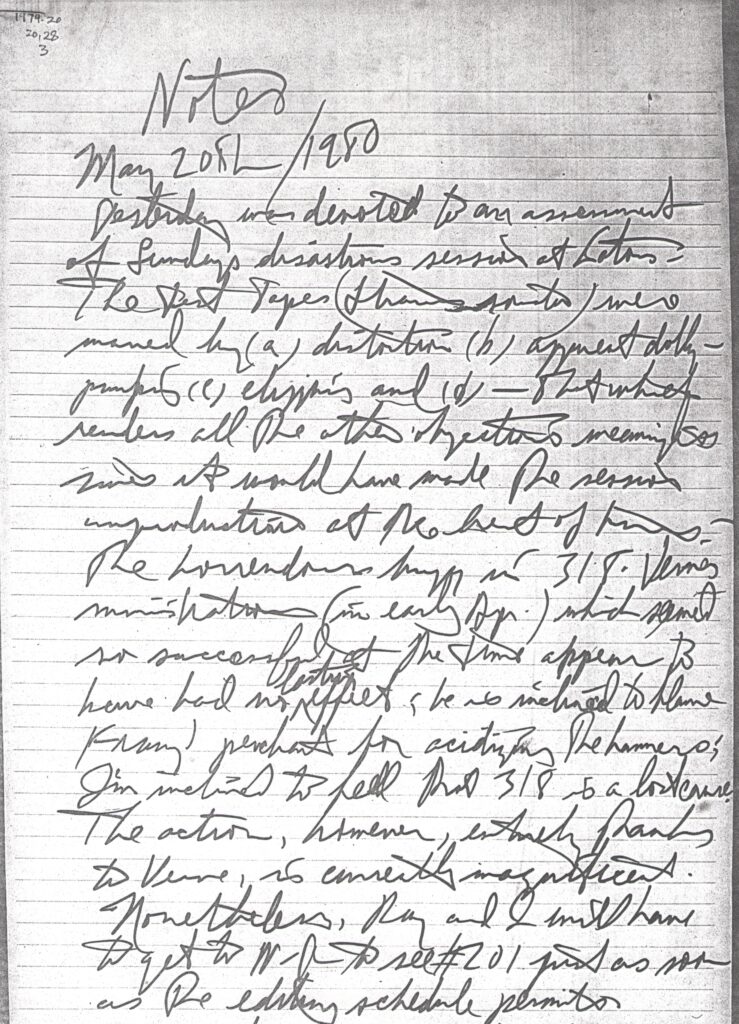
Two sustained diaries also survive among Gould’s private papers, one of them documenting a mysterious crisis in his piano playing that he reported during the years 1977-78, the other a more conventional diary that he maintained for some months in 1980. The two documents are very different in terms of content and style. The former diary was devoted specifically to perplexing problems he reported in his hands—recurrent pain, involuntary bending of the fingers, numbness, stiffness, swelling, tiredness and heaviness, lack of coordination and control, an inability to synchronize the hands with the mind, and others—as well as allied symptoms he detected in his arms, neck, shoulders, and spine. Gould documented in detail, with some drawings and diagrams, the numerous and strange experiments he conducted at the keyboard, analyzing every part of his performing mechanism in search of a solution. The language in the hand diary is idiosyncratic and obscure—he often writes pseudoscientifically, using the third person and the passive voice—and is very difficult to interpret. But his anxiety and anguish, his fragility and vulnerability, and at the same time his determination, patience, and perseverance in trying to heal himself in the midst of a terrifying situation are all clear to see. The 1980 diary, by contrast, recounts, in a simple and understandable style, quotidian personal and professional tasks. This document demonstrates how his daily routines revolved almost entirely around his work, in which respect he maintained a frenetic pace of activity even near the end of his life.
Gould seemed to take a pharmacological approach to his health without considering the enormous importance of taking care of himself and adopting healthy thoughts, behaviours, and habits. He did not take physical exercise, his diet was careless, he had sleep problems. He had no toxic habits, it is true—he did not smoke or drink—though he abused prescription drugs. His health was already delicate and fragile when he was a child, and he became cold easily. The fact that he was much affected by cold could point to certain immunological weaknesses or to metabolic or thyroid problems, but there is no documentary evidence of these problems. He constantly sought to protect himself, as his mother had once protected him; that ingrained need to shelter hid the fear of some disorder and, more generally, the common human fear of illness and death.
Of Gould’s genuine medical problems, the most serious (and the one he most feared) was arterial hypertension; the highest BP reading recorded in his 1980 diary was 180/118, after getting angry over a family matter; he had a familial predisposition to hypertension, which was manifest in both his parents and in his beloved cousin Jessie Greig, with whom he had a quasi-sibling relationship. In 1976, John A. Percival, his regular family doctor for the last eleven years of his life, diagnosed him with high blood pressure, and of course it would be a stroke that would eventually kill Gould, in 1982, at the age of fifty; a few days after being admitted to hospital after this stroke, his BP rose as high as 220/125. Over the years, he also reported a bewildering variety of symptoms affecting almost every bodily system: poor circulation; generalized muscular and skeletal pain; respiratory, gastrointestinal, and urinary problems; issues with his eyes and ears; palpitations; a hiatal hernia; discomfort in the genital area, as well as prostatitis; psoriasis; fever and fatigue; and more.
As for medications, Gould took anti-hypertensives, painkillers, sedatives and anxiolytics (i.e., anti-anxiety medications), antibiotics, anti-inflammatories, sleeping pills, and anti-gout medicine, as well as vitamins and many other supplements. His ingestion of drugs increased over the years, especially after 1980; between January and September 1982, he was prescribed more than two thousand pills, including benzodiazepines, which have a high risk of dependency when taken continuously for a long time. It is very likely that he became addicted to some drugs, especially diazepam.
Furthermore, Gould visited dentists and chiropractors quite regularly and received many physiotherapy, massage, and ultrasound treatments, and in April-May 1960, in the wake of the Steinway injury, his left arm and the upper part of his trunk were immobilized in a cast. Herbert J. Vear, a chiropractor who treated Gould from 1957 to 1977, believed that his main problem was musculoskeletal; he observed that X-rays showed early degeneration of some of Gould’s cervical intervertebral discs, and noted that he suffered ill effects from his hunched posture at the keyboard and from two old back injuries resulting from falls in childhood and adolescence. Incidentally, there is no record that Gould followed any dietary recommendations or took physical exercise, or that he ever had surgery of any kind, and no clear evidence that he received psychotherapy or psychiatric treatment, although he did consult informally with several psychiatrists.
In 2000, the American neurologist Frank R. Wilson, in his article “Glenn Gould’s Hand,” pointed out that Gould was predisposed to focal dystonia (FD). Though he admitted that he never examined Gould, Wilson proposed, on the basis of photographs, videos, and archival documents, that the structure of Gould’s hands, and problems in several fingers both while playing and at rest, lent credence to a diagnosis of FD. Other experts in dystonia among musicians have also described dystonic symptoms in Gould, notably Joaquín Farias, a leading specialist in the treatment of dystonia and director of the Neuroplastic Training Institute, in Toronto, who discusses Gould in his 2012 book Entrenamiento y Neuroplasticidad—Rehabilitación de distonías, un nuevo enfoque (Intertwined: How to Induce Neuroplasticity—A New Approach to Rehabilitating Dystonias).
Gould’s hands were a permanent source of concern for him. Very early in his career, he already presented difficulties playing and sometimes had to adjust his playing posture. As early as 1957, he spoke to his psychiatrist friend Peter Ostwald (the author, in 1997, of Glenn Gould: The Ecstasy and Tragedy of Genius) about pain and spasms in his arms, for which he had physiotherapy treatments, and he reported what he called “times of crises” involving his hands on many other occasions—in 1957 (in Russia), 1959 (on tour), 1960, 1962, 1965, 1966, 1967, and 1969, as well as 1977-78. Although he did not practice excessively at the piano, he had bad postural habits, playing in a stooped position while sitting on a very low chair that by his last years had lost its seat, and this would have caused neuromuscular pain and tension. In the hand diary from 1977-78, he wrote that he noticed a lack of naturalness and ease of movement, and an inability to synchronize his hands with his mind, resulting in a feeling of disconnection; Ostwald suggested a possible relationship between this crisis and the death of Gould’s mother, in 1975.
There are cases of recovery from FD, or at least partial recovery, in musicians, usually after treatment with specialized training. There is no evidence that Gould followed any specific therapy for FD, nor any evidence of re-education or rehabilitation that would explain his recovery from the problems reported in the hand diary, though he was constantly being treated by physical therapists, chiropractors, and masseurs. In his case, various factors could have influenced the symptoms he described and that fit partly with a diagnosis of FD. Pain is not a characteristic symptom of FD; it is usually absent or rare, and its presence could be the result of concomitant conditions (for instance, tendinitis). Involuntary movements, spasms, and tremors are more characteristic of this condition. FD can develop gradually, and sometimes appears owing to some precipitating factor. To make a diagnosis, musculoskeletal and neurological evaluation are necessary, also (in his case, as a pianist) careful observation of the subject while playing, to rule out other possible disorders. In Gould’s case, medical specialists themselves do not agree on all the factors that might have been present. I believe that Gould probably was predisposed to FD and possibly had some symptoms of it, but that this diagnosis cannot be confirmed and must remain a conjecture, in the absence of a complete clinical history, the results of exploratory tests, or evidence of treatments Gould had specifically for FD.
The following are the principal topics related to Gould’s health and personality that I reviewed as part of my research, in the order in which I address them in my dissertation: bipolar disorder, depressive disorders, somatic symptom disorder and illness anxiety disorder, personality disorders, autism spectrum disorder (including Asperger syndrome), high intellectual abilities, twice exceptionality, and two others already discussed: dystonia and his retirement from concert life. It is important to note that among the diagnostic criteria to be considered for these various disorders is that the diagnosis cannot apply if it is attributable to the physiological effects of a substance, such as a drug, which in Gould’s case is impossible to rule out.
According to some authors, Gould might have had depressive periods and there was a familial predisposition to bipolar disorder and depressive disorders. I found no evidence of manic or hypomanic episodes, of episodes of major depression, or of depressive disorders; he did not meet the diagnostic criteria for such a diagnosis. There is no evidence with Gould of a mood disturbance sufficiently severe to cause clinically significant distress or impairment in social, occupational, or other important areas of functioning, or to necessitate hospitalization. There is no testimony from him about feeling sad or hopeless or losing interest in activities, nor is there evidence from others of seeing him tearful or with external manifestations of depression. In fact, he joked and laughed constantly, and worked very productively; even in his later years (despite his aged appearance) he remained excited about his many projects, including what was to have been a major new professional career as an orchestra conductor. Some depressive traits might be observed sometimes in Gould, which could be related to his sleep problems and his tiredness, especially in his later years. Also, it may be that living alone for so many years, without a partner or children, sometimes caused episodes of sadness or depressed mood, but there is no evidence for this.
In addition to having genuine medical problems, Gould was also prone to somatic symptom disorder and illness anxiety disorder. These disorders can be difficult to differentiate, which is why I chose to consider them jointly given the complexity of the present case. Gould had somatic symptoms including discomfort and pain, disproportionate and persistent thoughts about the severity of these symptoms and excessive behaviours related to them, high anxiety, and a tendency to spend undue time and energy worrying about his health and symptoms. Furthermore, he showed permanent concern about his blood pressure, since he was well aware of the risks of hypertension; he was also excessively worried about getting cold, catching germs, and hurting his hands, and was anxious about having some serious illness, even though this was never confirmed by medical tests. He was constantly observing his own body in search of evidence of pathology, and frequently complained about his body and requested medical consultations and tests. He manifested such behaviour throughout his adult life, especially in his last years.
As for his fear of germs and contagion, he was raised that way as a child, though it is an exaggeration to say (as is sometimes reported) that he never went to hospitals for this reason: it is true that he did not visit his mother in hospital after she suffered a stroke in 1975, though he did visit his friend John Roberts several times when Roberts was hospitalized in the early 1960s; there are also records from various dates that he had treatments and tests performed in hospitals. It is often reported that Gould deplored physical contact, yet under congenial circumstances, when he felt no fear of infection, he would hug friends or accept chiropractic and massage treatments, which he evidently enjoyed. Though he died prematurely as a result of a cerebrovascular accident, and his autopsy revealed incipient atherosclerosis, enlargement of the left side of the heart, and an enlarged liver, no pathologies or abnormalities were found in his bones, joints, muscles, stomach, kidneys, prostate, or the other organs he had complained about constantly for years.
Personality disorders seem appropriate to consider in Gould’s case. Someone with a personality disorder tends to have a lifestyle that is out of step with his socio-cultural context, and may not be able to develop his potential adequately and positively. Such people are not usually aware of their disorder—they do not believe they are sick—and do not realize that their lifestyle is the main cause of their discomfort and problems with others. It is common to find traits of several personality disorders within a single subject, a certain style of personality in which characteristics typical of various disorders coexist with more or less intensity. The Jungian psychologist Lynne Walter, in her diplomate thesis Imagining Glenn Gould: A Speculative Study of His Psychology (1996), identified three personality disorders in Gould—schizoid, narcissistic, and obsessive—that led her to consider a diagnosis of mixed personality disorder, while Kevin Bazzana, in Wondrous Strange: The Life and Art of Glenn Gould (2003), also wrote about schizoid, narcissistic, and obsessive traits, as well as depressive ones. In my dissertation, I highlight several personality disorders in relation to Gould—schizoid, schizotypal, narcissistic, and obsessive-compulsive—and view his personality as a mixture of traits from these four, with obsessive-compulsive personality disorder predominating. Also, according to Peter Ostwald, Gould had at least one episode of mental illness, in late December of 1959, though Ostwald concluded that this was a brief episode of paranoid delusion likely caused by excess intake or improper combination of drugs.
Gould was a perfectionist who sought to keep everything in his life organized and under control, a trait manifested in his constant list-making, his tendency toward solitude, his excessive dedication to work, his difficulty expressing his emotions, and his feelings of embarrassment and shyness. He was highly creative, very productive, somewhat detached socially, eccentric and quirky, superstitious, and needing the security of familiarity and routine to bolster his confidence. His obsession with and tremendous pace of work, and his lack of interest in leisure activities, distanced him from social relationships, and he could be inflexible and puritanical in moral matters. It was very difficult for him to be intimate with people, though he did maintain some close relationships. While mostly isolating himself for the sake of his creative work, he did, in certain circumstances, enjoy talking, play, and having a good time with the right people. He hated crowds, yet for many years, when it was necessary, he did know how to cope with concerts and lectures that put him in front of thousands of people.
Gould was interested in what was happening in the world, had a great social conscience, was a pacifist, and was an passionate advocate for animals. The degree of selfishness and lack of empathy we attribute to him depends a lot on whose testimony we believe, as with some people he could be warm, affectionate, and helpful. His obsessive traits were detrimental in some respects, but in others they very much served his needs: his iron will, discipline, and organization were basic tools crucial to his great productivity. He was serious but at the same time witty and funny; he liked to be alone but did relate to the world when it suited him, and he did not feel asocial, since socialization for him was subordinated to his professional activity. The Gould seen by those who knew him most closely was upright, jokey, polite, and kind. He felt comfortable with his way of life and was highly valued by society.
Perhaps the most discussed and most controversial issue relating to Gould’s health and personality is the claim that he had Asperger syndrome (now included within autism spectrum disorder). This claim has been passionately accepted, tentatively considered, or flatly denied by people who knew Gould personally and by doctors and scholars who have studied his life. In my dissertation, I considered the views of Peter Ostwald, Kevin Bazzana, Timothy Maloney, Bruno Monsaingeon, Helen Mesaros, Lynne Walter, Tim Page, and Simon Baron-Cohen. We must keep in mind that Gould was never formally diagnosed with autism, and such speculation may be wrongheaded considering how well he managed his life; in many cases, subjects with an autism diagnosis need considerable support and struggle to get ahead, though there is a great diversity of autistic individuals and different levels of severity.
In order to defend a diagnosis of autism spectrum disorder, the diagnostic criteria must be met, and it is necessary to specify the level of severity and determine if other conditions or disorders are also involved. My own research leads me to believe that the (necessarily fragmentary) biographical evidence that survives does not imply such a diagnosis, which does not fully fit the realities of Gould’s life. There were certainly traits in his personality that could partly support an autism diagnosis, but this alone does not mean that such a diagnosis must be correct. A lot of caution is needed here; we must be careful about diagnosing a person who cannot be interviewed or examined, with whom we cannot analyze the results of certain necessary tests. To reach a diagnosis of autism spectrum disorder in this case is complicated, and to assume the necessary diagnostic criteria based solely on surviving biographical evidence, without a complete clinical history and the testimonies of close relatives, is inherently unreliable.
Therefore, we cannot accept, as we read in some published writings, that Gould clearly and definitely had an autism spectrum disorder; though this conclusion has been often repeated and widely circulated, it cannot be corroborated with certainty. Gould did not manifest the sort of mental damage that would prevent him from leading an effective life, and his symptoms did not cause clinically significant impairment in social, occupational, or other important areas of normal functioning. He managed very well living alone, amassed more than enough resources to live as he wished, developed his art intensely and enormously productively, and did what he loved doing over a period of many years.
Of course, we should remember that the manifestation of autism can vary a lot in different subjects, even within the lifespan of a single person. Sometimes, with autism spectrum disorder, difficulties in communication and social interaction can cause the individual and their family problems in certain areas, but in some cases of autism, if the subject has an adequate family and educational environment, autism is detected very early, and if the subject then receives early attention (and has high intelligence) it is possible that he adapts and can lead a well-adjusted life. In Gould’s case, there is no evidence that he was diagnosed with autism at a young age, or that his family and schools catered to an autistic’s needs, so if he had indeed been autistic it would have been very difficult for him to make the positive adjustments and adaptations that he clearly did make, as evidenced by the fact that he lived alone and managed his life very well. It is also necessary to consider over-medication and the presence of other disorders as possible factors that could confuse the symptomatology in Gould’s case, and to consider that certain traits can be exacerbated and become more rigid in someone who lives in considerable isolation, as he did. Therefore, a differential diagnosis must rule out other diagnostic possibilities before considering autism.
Gould is a strange and complex subject for a personality study; he was rife with ambiguities and contradictions. But one should not exaggerate here, or expect that everything can fit perfectly into a single coherent whole, given the inherent limitations in the surviving biographical data, and especially given that comorbidity (i.e., having two or more diseases or disorders at the same time) is seen frequently in psychology and psychiatry. Some arguments are stronger than others, but probably most diagnoses of Gould cannot be asserted with absolute certainty, and the desire to assert them can sometimes lead to efforts to make the evidence fit the theory and appear more solid than it really is.
The main conclusion of my own research is that Gould qualifies for a diagnosis of “twice exceptionality,” a term that psychologists apply to persons with a dual diagnosis, who possess one “exceptionality,” namely high intellectual abilities, accompanied by a second one—some disorder, difficulty, or disability of a different nature. Thus, in such persons, two very different diagnoses coexist; sometimes they can even be contradictory or can mask each other, and the coexistence of these two diagnoses is manifested in a specific set of symptoms and a specific set of personal needs, which differ from those in a person who presents with only one of these exceptionalities in isolation. The metaphor of the colour green, a combination of yellow and blue, is often used to convey twice-exceptionality, yellow representing the trait of giftedness, blue representing the other exceptionality to which the person is prone. Twice-exceptional persons can be different shades of green, but they are neither yellow nor blue; they are a mixture of both, with a new resulting identity.
About Gould’s high intellectual abilities there can be no question, even though we do not know for certain what his intelligence quotient (IQ) was. Some authors consider high intellectual ability to mean an IQ above 130, though most have opted for other parameters, such as percentiles (i.e., how a subject ranks within the general population) and personality and development characteristics; to these areas is added the measure of creativity. Gould clearly stood out among his peers as a child, as evidenced by his skipping a grade in elementary school, and several of his relatives reportedly had high intelligence, though no documentation of this survives. In the absence of IQ tests or other measures, we must consider other characteristics. Psychologists have proposed many models to define intelligence and high capacity. Especially relevant for my purposes have been two proposals by Joseph Renzulli, the Three Rings Model and the Multi-Criteria System for the Identification of High-Achieving and Creative/Productive Giftedness, as well as one by Steven I. Pfeiffer, the Tripartite Model of Giftedness (in Gould’s case, I apply the second of Pfeiffer’s three perspectives: outstanding achievements). These models view giftedness as based not merely on IQ, but include creativity as a central trait, and so seem very appropriate to Gould.
Also relevant is the Polish psychologist and psychiatrist Kazimierz Dabrowski’s concept of “overexcitabilities,” which reflects the great intensity with which very gifted people experience life. Dabrowski considered overexcitabilities to be a double-edged sword, because they can lead the subject to ecstasy but also to intense suffering. Dabrowski’s five overexcitabilities all seem particularly relevant to Gould:
- Psychomotor overexcitability: reflected in Gould’s workaholism; insomnia; altered sleep-wake rhythm and difficulty falling asleep; movements of the hands; rapid speech; and poor handwriting.
- Sensual overexcitability: reflected in Gould’s great sensitivity to noise, temperature, and light; his habit of removing shoes and wearing loose trousers; his absolute pitch, excellent hearing, and intense feeling for music; his abhorrence of strong, bright colours like red, notwithstanding his enjoyment of natural beauty (trees, sunsets, lakes, birds); and his hypersensitivity to touch.
- Intellectual overexcitability: reflected in Gould’s voraciousness as a reader and thinker; his curiosity and perfectionism; his hypercritical nature and fondness for expressing his opinions publicly; and his attraction to new technologies and innovations.
- Imaginational overexcitability: reflected in Gould’s flights of fancy and imagination; his sense of humour; and his fondness for alter-egos, pseudonyms, disguises, and invented characters.
- Emotional overexcitability: reflected in Gould’s intensity, psychosomatic symptoms, anxiety, fears, concern for his health, ecstasy and anguish, vulnerability to criticism, intolerance of frustration, and isolation and difficulties in socialization.
Already as a child Gould stood out intellectually from his peers; because of his precocity he was often called a child prodigy, and throughout his life many spoke of him as a genius. He got top marks at the conservatory, and from an early age he successfully combined academic and musical studies, showing excellence, creativity, motivation, persistence, and passion, especially in music. Because he sometimes seemed arrogant he had few friends, and this social rejection would have caused emotional problems that would have increased the rejection, creating a vicious circle that increasingly isolated him. As a consequence, he usually refused interpersonal relationships and avoided social situations which he perceived as adverse. As is typical of gifted students, he learned in great depth and breadth, but as a consequence experienced loneliness, and what should have been seen as displays of intelligence and imagination were misconstrued as strangeness or eccentricity.
Gould learned to read at a very early age, and he learned to read music even earlier. As a very young child he could already identify pitches and play melodies by ear, and invent tunes of his own. He demonstrated speed in mental calculations, an advanced vocabulary, and an extraordinary memory; he learned quickly, and enjoyed intellectual challenges; he was observant, curious, a perfectionist, highly motivated, and persevering, with a peculiar and sophisticated sense of humour, original and novel ideas, and a pronounced ethical sense; he was a non-conformist, hypersensitive, and enjoyed new technologies. He showed great creativity, composing music at an early age, and was funny and imaginative, of which there is copious evidence in his writings and broadcasts, including a fondness for pseudonymous alter egos. He often imbued his productions with comedy, with puns and double entendres, and he played characters of various nationalities complete with costumes, funny gestures, and exaggerated accents. He enjoyed such humorous displays of imagination and fantasy, and the Gouldian formula combining great intelligence, intensity, sensitivity, creativity, and humour was truly fascinating.
In short, Gould was unquestionably gifted, but that constitutes only part of what made him twice exceptional. Of the various disorders, disabilities, and difficulties that might accompany giftedness in a twice-exceptional person, the most frequently cited (they vary depending on the author) are specific learning difficulties, physical disabilities, speech and language disorders, emotional and behavioral difficulties, autism spectrum disorder, and attention deficit hyperactivity disorder. Twice-exceptional persons like Gould often have extraordinary abilities for certain things, but deficiencies in others, to the extent that such a person can sometimes appear to be two different people.To some authors, twice exceptionality is a broad diagnostic umbrella encompassing all those combinations in which the presence of high intelligence is accompanied by something that seems to be not quite right. The combination of the two exceptionalities creates a new condition that possesses both strengths and weaknesses, and with a double “face” that can be difficult to reconcile. Paradoxically, twice-exceptional persons crave change, but also need routine; they love novelty, but require routines in order to lead a predictable life. Gould seems to fit well into the twice-exceptional profile, even though we lack sufficient data to reliably diagnose the specific disorders and difficulties that accompanied his high intellectual abilities. Practically all of the strengths characteristic of twice exceptionality were evident in Gould, though only some of the challenges can be applied in him. The two “faces” in his case were, on the one hand, the intelligent and extraordinary pianist, and on the other, the anxious being, full of oddities, fears, and worries—a dichotomy captured by a phrase used by Peter Ostwald in the title of his Gould biography, “ecstasy and tragedy.”
Acknowledgement
My profound thanks to Kevin Bazzana, for supplying me with photocopies of archival documents and helping me in other ways with the research for my dissertation over the past two years, and for editing the text of this article.
Author Biography
Eugenia Biedma is a medical doctor and psychologist who lives in Seville, Spain. She holds bachelor’s and doctoral degrees in medicine, a bachelor’s degree in psychology, and a master’s degree in child and adolescent psychology, and is a specialist in psychopathology and health and an expert in the diagnosis of students with high abilities. She has worked extensively as a teacher, and as a specialist in international cooperation and human rights and collaborated for many years with Medicus Mundi Sur.
Biedma also holds a master’s degree in applied musicology and a Ph.D. in the humanities (music area). This article is drawn from her doctoral dissertation (2022) at the University of La Rioja, in Logroño, under the supervision of Pablo L. Rodríguez, “Las dos caras de Glenn Gould (1932-1982). Salud y personalidad del pianista canadiense”.— “The two faces of Glenn Gould (1932-1982). The health and personality of the Canadian pianist.”